The house wasn’t just a structure of brick and mortar; it was Arthur. Every creaking floorboard held the echo of his laughter, every sunbeam slicing through the living room dust motes danced with memories of our life together. At sixty-five, with the persistent ache of arthritis gnawing at my joints and lungs that wheezed a constant protest against the world, this home was my last bastion, the only place where the sharp edges of grief could soften into a comfortable, familiar ache. We had built it from the ground up, Arthur and I, pouring our dreams and sweat into its foundations, watching our children grow within its walls. After he passed, it became my sanctuary, a living museum of our love, and I clung to it with the ferocity of a drowning woman to a life raft. The thought of leaving, even for a moment, felt like abandoning a part of my soul.
My son, Michael, my only child, saw my struggle. He watched as the garden he’d played in as a boy slowly succumbed to weeds, as dust gathered on shelves I could no longer reach, and as the simple act of climbing the stairs became a Herculean task. He offered to move in, a suggestion I initially resisted, fiercely independent even in my frailty. But the loneliness was a heavier burden than the physical pain, and the thought of having him near, of laughter filling the rooms again, was a siren song I couldn’t resist. He was my boy, my comfort, my hope for a less solitary future. He promised to help, to lighten my load, to ensure I could stay in the home I cherished, and I believed him with every fiber of my being.
Then came Vanessa. She arrived like a perfectly coiffed storm, all polished smiles and saccharine charm. Michael introduced her with a nervous pride, and my heart, still fragile from Arthur’s loss, opened cautiously. She was younger, vibrant, and initially, seemed attentive, even doting. “We should live here, Michael,” she’d purr, her voice like warm honey, “it’s better for your mom. She needs us.” I overheard it one evening, a seemingly selfless declaration that made my old heart swell with a fleeting, dangerous optimism. Perhaps this was a new chapter, a chance for a bustling, happy home once more. I wanted to believe it so desperately that I overlooked the faint, almost imperceptible flicker in her eyes, a possessive glint that whispered of something far less benevolent.
The changes began subtly, like the slow, insidious creep of ivy over a cherished wall. First, it was the misplaced dishes, not just put away incorrectly, but seemingly *hidden*, only to be “discovered” by Vanessa with a sigh and a pointed look that suggested my memory was failing. Then, one crisp autumn morning, I came downstairs to find my worn, beloved armchair – the one Arthur had bought me for our tenth anniversary, the one where I’d read countless books and shed countless tears – gone. Replaced by a cold, modern monstrosity Vanessa had “found for a steal.” When I asked, my voice trembling, she merely shrugged, “Oh, that old thing? It was practically falling apart. We donated it. You’ll like this one much better, it’s so much more stylish.” It wasn’t just a chair; it was a piece of my history, summarily erased, and the pit in my stomach began to grow.
The disregard for my pain became a cruel sport. My arthritis flared, making every step agony, yet when I mentioned it, her eyes would glaze over, her attention already elsewhere. One particularly bad day, needing something from the kitchen, I asked Michael for help, but Vanessa intercepted, her voice sharp as glass, “If it’s that important, walk. You need the exercise.” Another time, when I desperately needed a doctor’s appointment and Michael was busy, she snapped, “I’m too tired – just call a cab!” The words, delivered with a chilling lack of empathy, felt like a physical blow. The house, once my haven, now felt like a gilded cage, its walls closing in, each day a new battle against an increasingly hostile presence. Michael, caught in her web, seemed blind to her cruelty, or perhaps, simply too weary to intervene.
The final, gut-wrenching blow came one frigid evening as we sat at the dinner table, the air thick with unspoken tension. Vanessa, without preamble, laid down her fork, her gaze fixed on me with an unnerving intensity. “It’s time, Evelyn,” she announced, her voice devoid of warmth, “It’s time for the nursing home.” The words hung in the air, heavy and suffocating, shattering the fragile peace I had desperately tried to maintain. My blood ran cold, my heart seized in my chest. It wasn’t a suggestion; it was a chilling pronouncement, a death sentence for my independence, for my very identity. I tried to protest, to plead, to look to Michael for help, but his eyes were averted, his silence a deafening testament to his betrayal. The days that followed were a blur of dread, each sunrise a countdown to an unknown, terrifying fate.
I woke to a strange, unsettling quiet. The morning light, usually a gentle comfort, felt harsh and intrusive. My eyes, still bleary from a restless night of fear-fueled dreams, slowly focused on a sight that sent a bolt of icy terror through me. My meticulously folded clothes, my cherished photos, my worn leather-bound journal – everything that represented *me* – lay neatly stacked in two large suitcases by the foot of my bed. Vanessa stood over them, a faint, triumphant smirk playing on her lips, her hands on her hips, a silent sentinel of my impending doom. The realization hit me with the force of a physical blow: this was it. This was the day. My breath hitched, a silent scream trapped in my throat as she approached, her eyes cold and unyielding. She didn’t speak, just gestured towards the packed bags, a silent command that brooked no argument. I was numb, my body moving on autopilot as she guided me, a frail, bewildered prisoner, out of my own bedroom, down the stairs I had once climbed with Arthur, and towards the front door. The scent of coffee, usually a comfort, now felt like a mocking farewell.
The car, an unfamiliar model, idled impatiently in the driveway. Through a haze of shock and utter disbelief, I registered Michael’s strained face as he held the passenger door open for me. He wouldn’t meet my gaze. Vanessa, however, offered a final, chillingly sweet smile before slamming the trunk shut, a sound that echoed the finality in my soul. As the car pulled away, I pressed my face against the cool glass, my eyes fixed on the house, my home, shrinking in the rearview mirror. I saw the vibrant rose bushes Arthur had planted, now a riot of color, blurring into a watercolor smudge. I saw the familiar porch swing, gently swaying in the morning breeze, a silent witness to a life that was no longer mine. A single tear tracked a path down my cheek, a hot, desolate stream. I was being driven away, not just from a house, but from every memory, every comfort, every piece of the life I had built. The road ahead stretched into an abyss of the unknown, and behind me, everything I had ever known was vanishing.
The drive was a blur of roadside trees and an oppressive silence, broken only by the hum of the engine and the frantic thumping of my own heart. I tried to speak, to ask where we were going, to plead with Michael, but my voice was a strangled whisper, lost somewhere between my lungs and my lips. Michael kept his eyes fixed on the road, his jaw tight, a portrait of miserable cowardice. Vanessa, beside him, occasionally glanced back at me in the rearview mirror, her expression a chilling blend of triumph and impatience. When we finally pulled into the sprawling, institutional-looking driveway, my stomach plummeted. “Sunny Meadows Care Facility,” a cheerful, utterly deceptive sign proclaimed. It looked less like a meadow and more like a fortress, designed to keep people in, not welcome them home.
The air inside was thick with the scent of disinfectant and something else, something cloyingly sweet and faintly medicinal that made my already protesting lungs tighten further. The vibrant life of my home, the familiar smell of Arthur’s pipe tobacco clinging to the curtains, the faint aroma of my baking, was replaced by a sterile, impersonal efficiency. Vanessa ushered me through the bustling reception area, her grip on my arm surprisingly firm, while Michael trailed behind, burdened with my two suitcases, looking utterly defeated. I was introduced to a kind-faced nurse with an overly bright smile, who spoke to me in a gentle, almost patronizing tone, as if I were already fading. My room was small, with a single bed, a plastic chair, and a window overlooking a manicured, but ultimately desolate, patch of grass. My world, once expansive and filled with history, had shrunk to four beige walls. As Michael placed my bags down and Vanessa offered a final, hollow “Goodbye, Evelyn, we’ll visit soon,” I watched them walk away, their retreating figures casting long, indifferent shadows. The door clicked shut, severing the last thread to my old life, leaving me adrift in a sea of strangers and forgotten dreams.
Days bled into weeks, each one a monotonous cycle of scheduled meals, forced activities, and the quiet despair of knowing I was utterly alone. My arthritis flared with the damp chill of the facility, and my lung issues felt exacerbated by the stale, recirculated air. I longed for the simple comfort of my own bed, the sight of my rose garden from my bedroom window, the comforting weight of Arthur’s old sweater draped over a chair. I tried to call Michael, but his phone often went straight to voicemail, or Vanessa would answer, her voice dripping with false concern, claiming he was “too busy” or “resting.” The other residents, kind as some were, were not my family. Their stories were not mine, and my grief, already a heavy companion, grew heavier with the burden of abandonment. I felt like a ghost haunting my own present, a prisoner in a body that was failing, and a mind that refused to forget.
It was my daughter, Sarah, who finally broke through the suffocating silence. She lived three states away, a busy lawyer with a demanding career, but we spoke every Sunday. When a month passed without her hearing from me, and Michael’s evasive answers became increasingly suspicious, a cold dread began to coil in her stomach. She called our old neighbor, Mrs. Henderson, a woman who had known me since I was a young bride. Mrs. Henderson, bless her nosy heart, reported seeing a moving truck and then a new car in my driveway, and had wondered why she hadn’t seen me tending my roses. The pieces clicked into place with horrifying clarity for Sarah. A missed call, a mother suddenly unreachable, a neighbor’s observation – it was enough. The fire in her belly ignited, a protective fury that had been dormant since childhood, now roaring to life. She dropped everything, packed a bag, and began the long, furious drive home.
When Sarah burst through the front door of *my* house two days later, the air crackled with her indignation. She hadn’t even knocked, having used the spare key I’d given her years ago. Vanessa was in the living room, redecorating, a new, garish painting hanging precisely where Arthur’s favorite landscape once was. Michael sat on the sofa, scrolling through his phone, looking utterly oblivious. Sarah’s voice, usually calm and measured, was a whipcrack in the pristine, unfamiliar space. “Where is she?” she demanded, her eyes blazing, fixing first on Michael, then on a startled Vanessa. “Where is my mother?” Vanessa, momentarily stunned, tried to recover, her saccharine smile faltering. “Oh, Sarah, dear! How lovely to see you! Your mother is… well, she’s in a lovely place now, getting the care she needs.” But the lie was thin, transparent. Sarah wasn’t buying it.
“A ‘lovely place’?” Sarah’s voice rose, edged with a dangerous calm. “You mean the nursing home you illegally coerced her into, after systematically dismantling her life and driving her from her own home?” Michael finally looked up, his face paling, but before he could stammer a defense, Sarah continued, her gaze pinning Vanessa. “I’ve already spoken to Mrs. Henderson. I’ve spoken to the facility. I know everything.” Vanessa’s composure began to crack, a desperate fear flickering in her eyes. “You can’t prove anything!” she hissed, her voice losing its honeyed edge, revealing the bitter truth beneath. “She needed care! Michael agreed!” Sarah laughed, a sharp, humorless sound. “Michael agreed because you manipulated him, Vanessa. And I have power of attorney. I have medical records detailing my mother’s mental acuity, signed by her doctor just months ago. I have witnesses to your harassment. And I have a lawyer on speed dial who specializes in elder abuse cases. You want to see how quickly ‘karma’ can arrive, Vanessa? Because I am karma, and I’ve just walked through your front door.”
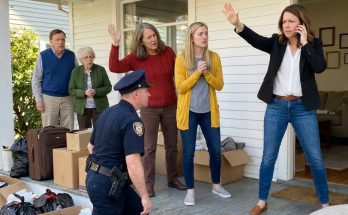
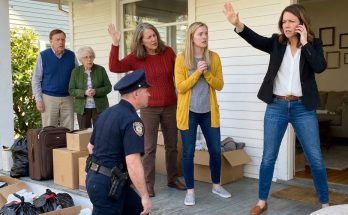
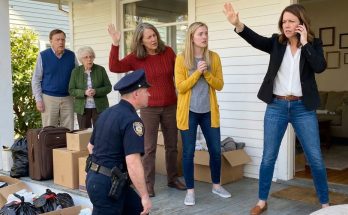
The color drained from Vanessa’s face as Sarah, with an unwavering resolve, explained precisely what would happen next. The immediate retrieval of her mother, the police report for elder abuse and unlawful confinement, the legal action to have Vanessa removed from the house and Michael’s name taken off the deed, effectively leaving them both homeless and facing serious charges. Michael, finally understanding the gravity of their situation, stared at Vanessa with a dawning horror, seeing her not as his charming wife, but as the ruthless architect of their impending ruin. Within hours, Sarah had me out of Sunny Meadows, my heart swelling with a gratitude so profound it brought tears to my eyes. And when we drove back to my house, our house, the one Arthur and I had built, Vanessa and Michael were gone, their belongings haphazardly piled on the curb. The front door stood open, a silent invitation to reclaim what was mine. Sarah led me inside, her arm around my shoulders, and the scent of my roses, of home, washed over me like a healing balm. Karma, it seemed, had arrived indeed, with a furious daughter at its helm, and it was a force more formidable than any storm Vanessa could ever conjure. My home was mine again, and with Sarah by my side, I knew I would never be driven away from it again.