The crisp white lace of my wedding dress felt like a dream against my skin, a stark contrast to the growing nightmare unfolding around me. I stood at the altar, my hand clasped firmly in Liam’s, our eyes locked in a bubble of love that, for a precious few moments, shielded me from the glaring emptiness of the first few rows. The scent of lilies, chosen specifically because my mother always loved them, now seemed to mock me, their sweet fragrance heavy with the absence of the very person they were meant to honor. My heart, which should have been soaring, was a leaden weight in my chest. Not a single familiar face from my side of the family graced the pews. No proud mother, no stern but loving father, no boisterous brother. The silence from their side wasn’t just physical; it was deafening, a roaring chasm of abandonment that swallowed every joyous sound. Not a single call had been made, not a solitary message sent, no explanation offered for their collective, deliberate absence. As I exchanged vows with Liam, my voice wavered only slightly, a tiny tremor that only he seemed to notice, squeezing my hand tighter in a silent promise of unwavering support. But even his boundless love couldn’t mend the gaping wound carved into my soul that day.
The weeks that followed were a blur of bewildered grief and festering resentment. Liam, bless his patient heart, tried everything to lift my spirits, transforming our cozy apartment into a sanctuary of warmth and understanding. We honeymooned in a quiet cabin by a lake, far from the judging eyes I imagined everywhere, eyes that knew I’d been abandoned on the happiest day of my life. I tried to rationalize it, to find an excuse for their behavior – maybe a misunderstanding, a forgotten invitation, some catastrophic, shared emergency. But deep down, I knew better. This wasn’t an oversight; it was a statement. A brutal, unequivocal declaration of my place, or lack thereof, within the family unit I had always yearned to belong to. The constant feeling of being the ‘other,’ the less-favored child, had always simmered beneath the surface, but now it had boiled over, scalding me with its undeniable truth. I existed to them only when it was convenient, or perhaps, when I could be useful.
It was precisely three weeks and four days after I said “I do” to Liam, in the quiet lull of a Tuesday afternoon, that my phone buzzed on the kitchen counter. I was stirring a pot of pasta sauce, humming a tune, momentarily lost in the simple domesticity of my new life. The screen lit up with a name I hadn’t seen in months, a name that, for a moment, made my breath hitch: “Dad.” My hand, holding the wooden spoon, froze mid-air. After the gaping void of my wedding day, after the radio silence that had stretched like an eternity, he was texting. A flicker of hope, foolish and fragile, dared to ignite within me. Perhaps an apology, an explanation, a belated congratulations? I swiped open the message, my thumb trembling slightly. The words that appeared on the screen were a punch to the gut, extinguishing that tiny flame and replacing it with a cold, hard ember of fury: “We need to raise $8,400 for your brother’s wedding. Transfer it by Friday.”
I stared at the screen, not just for seconds, but for what felt like an eternity. The audacity. The sheer, unmitigated gall. Not a single word of apology for their collective snub, no acknowledgment of the pain they had inflicted, just a casual, almost demanding request for a significant sum of money for the very brother whose wedding they clearly prioritized over mine. My mind reeled through years of similar slights: my small achievements downplayed, my brother’s celebrated; my needs overlooked, his instantly met. The favoritism had always been a bitter pill, but this, this was a poisoned chalice. A slow, simmering rage began to bubble beneath my composure, hardening my resolve. The demand felt like a final insult, a test to see if I would still jump at their command, even after they had so callously discarded me.
A strange calm descended upon me, a cold clarity that sharpened my focus. My fingers, steady now, navigated to my banking app. I typed in the amount, not the demanded $8,400, but a single, defiant dollar. For the memo, I chose my words with meticulous care, each letter a precise cut: “Best wishes.” It was loaded with sarcasm, a final, unyielding declaration of independence. I hit ‘send’ and felt a surge of power, a reclamation of my dignity that was long overdue. Then, I turned to Liam, who had quietly entered the kitchen, sensing the shift in my mood. His eyes met mine, full of question and concern. “Honey,” I said, my voice steady, imbued with a newfound steel, “I need you to call a locksmith. Every single lock in this house needs to be changed. Today.” He didn’t ask why; he simply nodded, understanding the unspoken finality in my request.
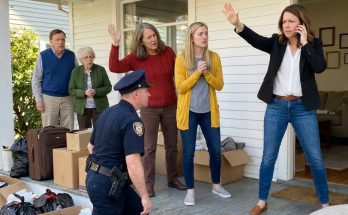
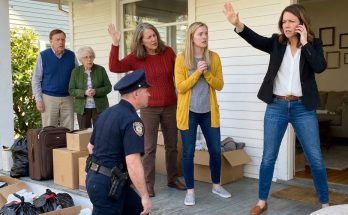
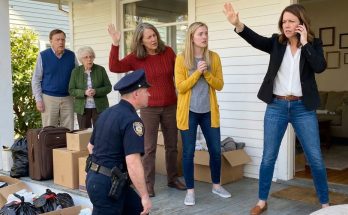
The new locks were installed by late afternoon, a symbolic barrier against the family who had become strangers. A quiet tension settled over our home, a sense of anticipation. I knew, with a certainty that chilled me to the bone, that my dollar and my message would not be met with silence. The response came faster than even I expected. We were just settling down for dinner, the aroma of Liam’s homemade lasagna filling the air, when a series of thunderous, insistent knocks rattled our front door, shaking the entire frame. My heart leaped into my throat. Liam and I exchanged a glance, his hand instinctively going to my arm. I walked to the peephole, my breath catching as I peered through. Standing on my porch, his face contorted in a mask of fury, was my father. And directly behind him, looming large and official, were two uniformed police officers.
The sight of my father, his face a grotesque mask of purple rage, momentarily stole my breath. But it was the two police officers, their uniforms crisp and their expressions unreadable, that truly sent a jolt of icy fear through me. My hand instinctively flew to my mouth, muffling a gasp. Liam was by my side in an instant, his arm wrapping protectively around my waist, a silent anchor in the sudden tempest. The thunderous knocking had ceased, replaced by the heavy silence of confrontation. I slowly unlatched the deadbolt, the metallic click echoing unnaturally loud in the sudden quiet, and pulled the door open just wide enough to see their faces clearly, but not wide enough to invite them in. “Dad?” I managed, my voice a thin thread, laced with a disbelief that warred with the bitter certainty I’d felt all day.
“What in God’s name is this, [My Name]?” my father spat, his voice booming, eyes blazing with an unholy fire. He gestured wildly with a trembling hand, indicating the $1 memo he must have just seen on his phone. “One dollar?! One single dollar for your brother’s wedding? Do you know the shame you’ve brought upon this family? Do you know what people will say?” He leaned closer, his breath hot with anger, reeking faintly of stale cigarettes. “And then you change the locks? Are you trying to cut us off? After everything we’ve done for you?” The officers shifted uncomfortably behind him, one taking a small step forward, his hand resting lightly on the belt where his equipment hung. He cleared his throat, a subtle warning for my father to lower his voice.
I took a deep, steadying breath, the cold clarity from earlier returning in full force, hardening my spine. My gaze met my father’s, unwavering. “Everything you’ve done for me, Dad?” I repeated, my voice calm, almost eerily so, in stark contrast to his bluster. “Is that what you call abandoning me on my wedding day? Not a call, not a message, not a single family member showing up for the most important day of my life? Is that what you call ‘everything’?” I paused, letting the words hang in the air, a silent accusation that seemed to momentarily deflate some of his fury. “That $1 was ‘best wishes.’ It was my message. And changing the locks was me ensuring my home remains a sanctuary from people who clearly have no respect or care for me.” I looked pointedly at the officers. “I’ve done nothing illegal. This is my property, and I’m merely exercising my right to privacy.”
The older officer, a man with kind eyes and a salt-and-pepper mustache, stepped forward, his expression now more thoughtful. “Ma’am, Mr. [Father’s Last Name] here called us, stating he felt he was being defrauded of money and that he was being prevented from accessing family property.” He looked from my father to me, a flicker of understanding dawning in his eyes as he absorbed my words. “He mentioned a significant sum for a wedding, and then a $1 transfer.” My father interjected, his voice rising again, “She owes us! She has always been expected to contribute! This is an insult! We need that money!” Liam, who had remained silent but vigilant, now spoke up, his voice firm but respectful. “Officers, my wife and I were married three weeks ago. Not a single member of her family attended. They didn’t even acknowledge it. Now, they’re demanding money for her brother’s wedding, without any apology or explanation for their absence. This isn’t a legal dispute; it’s a family matter that my wife has chosen to resolve by setting boundaries.”
The officers exchanged a look. The salt-and-pepper mustache officer turned back to my father, his tone shifting from inquiry to gentle but firm authority. “Mr. [Father’s Last Name], while we understand this is a deeply personal and emotional issue for you, the police cannot intervene in what appears to be a civil disagreement over a voluntary financial contribution, especially when there’s no evidence of a legally binding agreement or fraud. Your daughter is within her rights to manage her own finances and secure her own property.” He gestured vaguely at the new locks. “It seems she’s simply exercising her right to decide who enters her home.” My father’s face crumbled from fury into a pathetic mixture of disbelief and defeat. He opened his mouth to protest, but the officer raised a hand. “Sir, I’m afraid there’s nothing further we can do here. We advise you to try and resolve this privately, if at all possible.”
The finality in the officer’s voice hung heavy in the twilight air. My father’s shoulders slumped. The fire in his eyes was replaced by a hollow, bewildered stare, as if he couldn’t comprehend how his power play had so spectacularly backfired. He looked at me, then at Liam, then back at the officers, as if searching for an ally, a loophole, anything. But there was nothing. With a defeated sigh that seemed to carry the weight of years of unchecked entitlement, he mumbled something inaudible and turned away, shuffling down the porch steps, his imposing figure suddenly seeming small and insignificant. The officers offered us a curt nod, a silent acknowledgment of the difficult situation, and then followed my father, their presence fading into the deepening dusk. The heavy thud of their car doors closing and the distant hum of their engine driving away were the only sounds that broke the silence.
I closed the door slowly, leaning against it, my legs suddenly weak. The adrenaline that had propelled me through the confrontation began to drain, leaving me trembling. Liam pulled me into his arms, holding me tightly as I buried my face in his chest, hot tears finally escaping. They weren’t tears of sadness, not entirely. They were tears of relief, of anger, of a profound, aching sorrow for the family I had lost, but also, crucially, tears of triumph. In that moment, facing them down, I had finally severed the invisible chains that had bound me to their toxic expectations. I had stood my ground, protected my home, and, most importantly, protected my new life with Liam. The new locks weren’t just on the doors; they were on my heart, securing it against further invasion. This wasn’t just over; it was finally, truly, begun. My new chapter, free from the shadow of their abandonment, stretched before me, bright and uncertain, but undeniably mine.