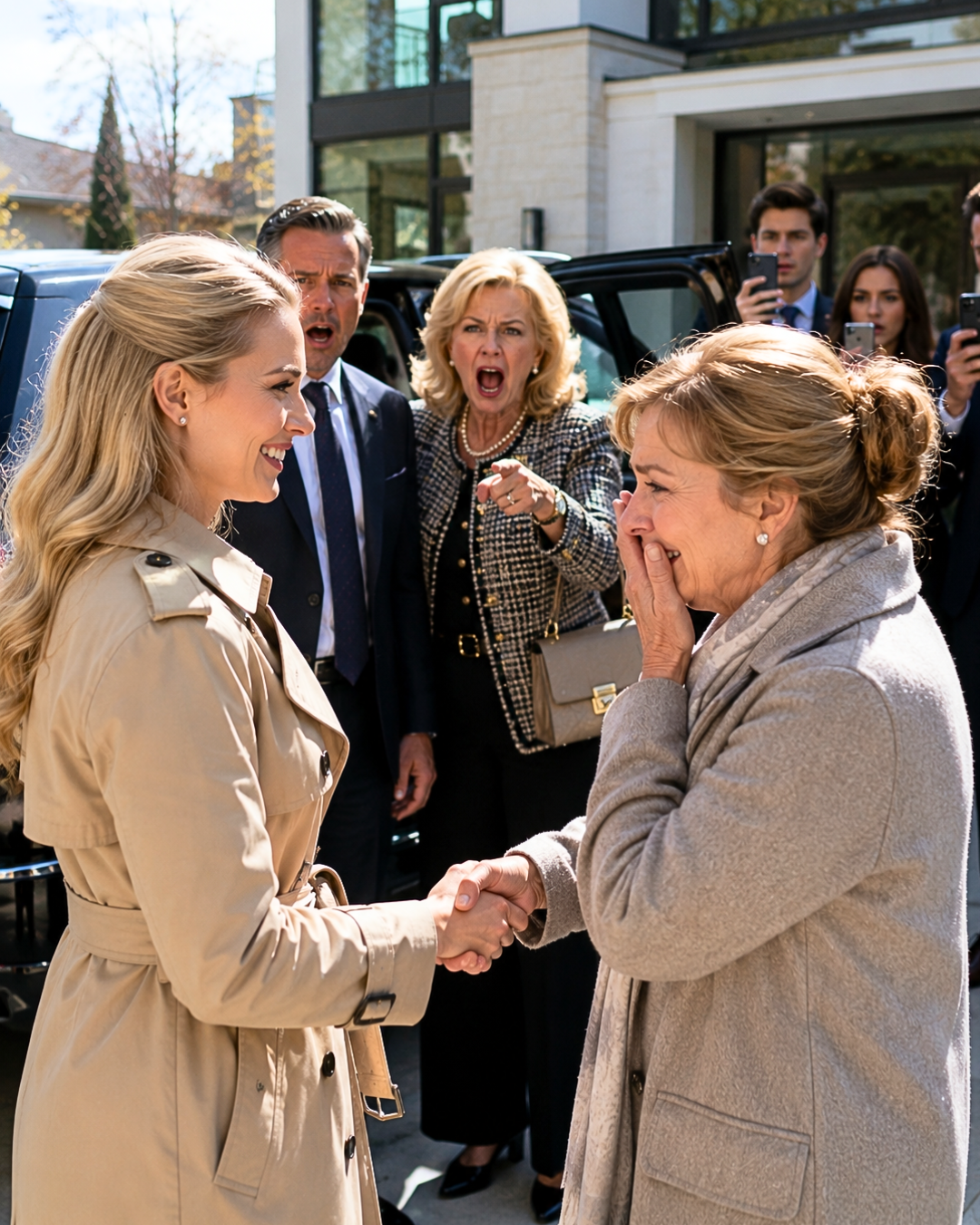

When cancer left me too weak to stand, my mother-in-law persuaded my husband to leave me for another woman. Then she leaned over my hospital bed and smiled, “At least now he has a real future.” I thought I had lost everything—until my father-in-law walked in, heard her, and said, “Enough.” What he announced next made her face turn white.
My name is Grace Miller, and when cancer made me too weak to lift a glass of water, my mother-in-law decided I no longer had value.
I was thirty-two when doctors diagnosed me with lymphoma. My husband, Ethan, cried in the doctor’s office and promised, “I’m not going anywhere, Grace. We fight this together.”
For the first few months, I believed him.
Then his mother, Margaret, began coming over every day.
At first, she brought soup and folded blankets. Then the remarks started.
“Ethan is still young,” she said once while changing the flowers beside my bed. “A man shouldn’t lose his whole life because his wife got sick.”
I told Ethan. He sighed and said, “Mom is scared. Don’t take everything personally.”
But Margaret was not scared. She was arranging things.
One afternoon, I woke from chemotherapy nausea and heard her in the hallway, whispering into Ethan’s phone.
“Melissa is healthy, beautiful, and wants children,” Margaret said. “Grace can barely leave the bed. You need to think about your future.”
Two weeks later, Ethan told me he needed “space.”
Three weeks later, he moved into an apartment.
A month later, I learned Melissa was his coworker.
Margaret came to see me the day after Ethan left. She stood at the foot of my bed, perfectly dressed, holding a designer purse.
“You should let him go peacefully,” she said. “At least now he has a real future.”
I was too exhausted to shout. Too exhausted to cry. I only stared at her while the IV machine clicked beside me.
Then the bedroom door opened.
My father-in-law, Richard, stepped inside.
He had been quiet throughout my entire marriage, the kind of man who watched more than he spoke. But that day, his face was hard.
“Margaret,” he said, “I heard every word.”
She went pale. “Richard, this isn’t what it sounds like.”
He looked at me, then back at his wife.
“No,” he said. “It is exactly what it sounds like.”
Margaret laughed nervously. “Don’t be dramatic.”
Richard reached into his coat pocket and pulled out an envelope.
“I’m done being quiet,” he said. “And today, everyone is going to know what you’ve done.”
Part 2
Margaret stared at the envelope as though it were a weapon.
“Richard,” she warned, “this is family business.”
“No,” he said. “What you did to Grace is family business. What Ethan did is cowardice. What I’m holding is consequences.”
My heart pounded so hard I felt it in my throat.
Richard sat in the chair beside my bed and handed me a small recorder. “Grace, I need your permission to share what Margaret just said. I recorded it because I knew she would deny it.”
Margaret gasped. “You recorded your own wife?”
Richard’s voice stayed steady. “I recorded a woman abusing a cancer patient.”
For the first time, Margaret had nothing to say.
That evening, Richard called Ethan and told him to come to the house immediately. Ethan arrived with irritation on his face, as if my illness had become another inconvenience he had to schedule around. Margaret followed him into the living room, still pretending to be offended.
I stayed in bed, but Richard put the call on speaker so I could hear.
Ethan sighed. “Dad, I don’t know why this had to be urgent.”
Richard said, “Because your wife is sick, you abandoned her, and your mother helped push you out the door.”
Ethan went silent.
Margaret snapped, “I helped him choose life.”
Richard placed the recorder on the table and pressed play.
Margaret’s voice filled the room: “Grace can barely leave the bed. You need to think about your future.”
Then: “At least now he has a real future.”
Ethan whispered, “Mom…”
But Richard was not finished.
“I spent forty years building this family’s company,” he said. “I had planned to leave my shares to you, Ethan. But after watching how you treat a woman who loved you through everything, I changed my will.”
Margaret released a sharp breath. “You did what?”
Richard continued, “Grace will receive my controlling shares in the Miller Foundation and the medical trust I created for long-term care. Ethan will receive a small personal account. Margaret will receive nothing beyond what the law requires.”
Ethan exploded. “You’re giving my inheritance to her?”
Richard’s voice turned cold. “She acted more like family than either of you.”
Margaret screamed, “You can’t humiliate me like this!”
Richard replied, “You humiliated yourself.”
Then he looked toward my bedroom and said the words that made me cry.
“Grace, you will never be helpless in this family again.”
Part 3
The next week felt like a storm breaking over the house.
Ethan came back twice, not to apologize, but to ask whether I had “influenced” his father. Margaret called me cruel, manipulative, and ungrateful. She said Richard was confused. She said cancer had made everyone emotional.
But Richard had prepared carefully.
His attorney, Caroline Brooks, confirmed the revised will, the medical trust, and the foundation shares had all been signed while Richard was fully competent. He had also written a statement explaining exactly why he changed everything.
In it, he wrote: Character is not proven when life is easy. It is proven beside a hospital bed. Grace stayed. Ethan left. Margaret pushed him. I saw enough.
I read that sentence again and again.
For so long, I had felt like a burden. I had watched my hair fall out, my body weaken, my marriage collapse, and my voice shrink until all I could do was survive the next appointment. Richard’s decision did not cure me, but it gave back something I had lost: dignity.
Ethan’s relationship with Melissa ended quickly once he realized there would be no fortune attached to him. He called me one night, crying.
“I made a mistake,” he said.
“No,” I answered softly. “You made a choice when I was too sick to chase you.”
He asked if we could begin again.
I said no.
Margaret never apologized. People like her often confuse silence with victory and exposure with cruelty. When she realized Richard would not change the will back, she moved into a condo across town and told everyone I had “stolen the family.”
But the truth was simpler.
They let go of me because they thought I had nothing left.
Richard held on because he still saw me as a person.
A year later, my scans came back clear.
I stood outside the cancer center holding the results in my shaking hands while Richard waited beside the car. He did not say anything dramatic. He simply opened his arms, and I cried into his shoulder like a daughter.
Later, I used part of the medical trust to create a patient support fund for women abandoned during serious illness. Richard helped me name it the Grace Forward Fund.
Not because I was graceful.
Because I kept moving forward.
And if you are reading this, remember: the people who leave when you are weakest are showing you who they always were.
If your spouse abandoned you during cancer and his mother celebrated it, would you forgive them—or accept the help of the one person brave enough to expose the truth?

