The crisp autumn air held a promise of new beginnings, a gentle chill that did little to dampen the vibrant warmth radiating from the dozens of fairy lights strung across the ancient oak tree in our chosen garden venue. My dress, a cascade of ivory lace and silk, felt like a second skin, each stitch a testament to the dreams I’d woven into this day. As the string quartet began their prelude, a familiar flutter of anticipation—and a more insidious one of dread—stirred in my chest. I scanned the rows of elegantly dressed guests, my eyes lingering on the empty seats at the very front, reserved specifically for my parents and siblings. Each tick of the clock, each polite smile exchanged with my fiancé’s beaming relatives, was a fresh stab of doubt. Surely, they were just running late. Surely, they wouldn’t miss this.
But as the final notes of the processional swelled, and my wonderful fiancé, Mark, turned to face me at the altar, his eyes shining with adoration, those seats remained starkly, brutally empty. Not a single call had come through, not a solitary message. The silence from my family was a gaping wound amidst the joyous symphony of our wedding. I walked down the aisle, a smile plastered on my face, my heart a leaden weight in my chest. Each step was a battle against the rising tide of humiliation and disbelief. How could they? How could they, my own flesh and blood, choose to be absent on the most significant day of my life, without even the courtesy of an explanation? My eyes, despite my best efforts, kept darting to those vacant chairs, a constant, agonizing reminder of their deliberate abandonment.
The days that followed were a blur of honeymoon bliss tainted by a deep, throbbing ache. Mark was everything I could ever wish for – kind, understanding, and furious on my behalf. His family, a beautiful tapestry of warmth and genuine affection, went out of their way to embrace me, attempting to fill the void my own had left. Yet, the silence from my side persisted. Not a single post-wedding congratulation, no belated apology, no awkward explanation for their collective no-show. It was as if I had ceased to exist, wiped clean from their family narrative. Growing up, I’d always felt like the outsider, the one whose achievements were subtly downplayed, whose needs were secondary to my brother Leo’s. But this, this complete erasure, was a new level of cruelty, a definitive declaration of where I stood – or rather, didn’t stand – in their lives. I tried to move on, to truly believe that Mark and I were enough, that we would build our own family, stronger and more loving. But a part of me, a deeply wounded part, was always listening for a call that never came.
Weeks bled into a month, then another. The initial shock had given way to a quiet, simmering resentment, occasionally flaring into cold fury, then settling into a resigned acceptance. We were busy decorating our new home, planning our future, trying to construct a life where the gaping hole left by my family’s betrayal didn’t define us. I had almost convinced myself I was at peace with it, that I had successfully cauterized the wound and was ready to embrace a future unburdened by their emotional neglect. The idea of them, once a source of constant yearning, had begun to recede, replaced by a fierce protectiveness of my newfound happiness with Mark.
Then, one quiet afternoon, as I was unpacking boxes of wedding gifts, my phone buzzed with an unfamiliar intensity. It was a text message, short and blunt, from my father. My breath hitched. A sliver of hope, foolish and persistent, flickered. Had he finally decided to reach out? To apologize? To explain? I held my breath, my thumb hovering over the screen, a strange mix of dread and longing churning inside me. I opened it. “We need $8,400 for your brother’s wedding.” The words hit me like a physical blow. There was no “hello,” no “how are you,” no acknowledgement of my wedding, or their absence. Just a demand, cold and unapologetic, for my brother Leo’s upcoming nuptials. Leo, the golden child, whose every whim had always been prioritized.
A slow, burning rage began to build in my chest, eclipsing the lingering pain. Eight thousand four hundred dollars. After abandoning me on my wedding day, after weeks of deafening silence, they had the unmitigated gall to casually text me for money, as if nothing had happened, as if I were merely an ATM in their lives. Mark, sensing the sudden shift in my demeanor, came over and read the message over my shoulder. His jaw tightened, his eyes flashing with protective anger. “Unbelievable,” he muttered, pulling me into a hug. But this time, I didn’t want comfort. I wanted to fight back. I stared at the screen, a chilling calm settling over me. The number, $8,400, seemed to mock me. I opened my banking app, my fingers moving with a deliberate precision I hadn’t known I possessed. I typed in “1” dollar. For the note, I added a single, potent phrase: “Best wishes.” It wasn’t about the money; it was a message, a mirror reflecting their own hollow gesture back at them. You give me nothing, you get nothing.
The moment I pressed ‘send,’ a strange sense of liberation washed over me, quickly followed by a primal instinct for self-preservation. This wasn’t over. This was a declaration of war, a line in the sand. I turned to Mark, my voice steady despite the tremor in my hands. “We need to change every single lock in the house,” I told him, my gaze meeting his. He didn’t question it, simply nodded, already pulling out his phone to call a locksmith. We spent the rest of the afternoon replacing every deadbolt, every handle, every vulnerability. Each click of the new locks was a physical barrier, a symbol of the emotional fortress I was building around myself and my new husband. A quiet, unsettling certainty settled over me: the silence was broken, and the storm was coming.
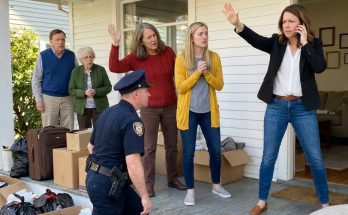
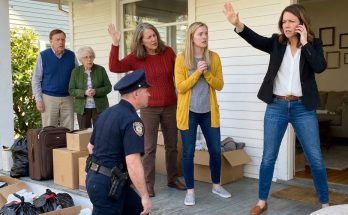
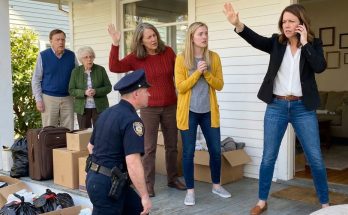
The new locks were barely in place when it happened. The sun was beginning its slow descent, painting the sky in hues of orange and purple, when a series of thunderous knocks rattled our front door. It wasn’t a polite tap; it was an aggressive, demanding assault. My heart leaped into my throat. I hesitated, then walked towards the door, Mark right behind me, his hand resting protectively on my back. Through the peephole, I saw him. My father. His face was contorted in a mask of fury I hadn’t seen in years, his eyes blazing with a dangerous intensity. And then I saw them. Two police officers, standing just behind him, their uniforms stark against the fading light, their expressions unreadable. In that moment, a cold dread solidified in my stomach. This wasn’t just a confrontation; it was a declaration of war. And I knew, with absolute certainty, this was far from over.
I felt Mark’s hand tighten on my back, a silent anchor in the swirling chaos of my emotions. The image of my father’s distorted face, framed by the peephole, was etched into my mind, a grotesque caricature of the man who once held my hand. Taking a deep breath, I slowly unlatched the deadbolt, the metallic click echoing loudly in the sudden stillness. The door swung inward just enough for me to see him fully, his eyes blazing with a cold fury that made my stomach clench. Behind him, the two officers stood impassively, their presence a chilling official backdrop to this deeply personal war.
“What do you want, Dad?” My voice, to my own surprise, was steady, devoid of the tremor I felt deep within. My father, however, was past civility. “What do I want?!” he roared, his voice cracking with outrage, oblivious to the neighbors who might be peeking through their curtains. “You know damn well what I want! You think you’re clever, sending a dollar? Eight thousand four hundred dollars, you ungrateful brat! For your brother’s wedding! Do you have any idea how much we’ve done for you?” He gestured wildly, his face flushed crimson, spittle flying from his lips. The officers remained silent, their gazes shifting between us, assessing the scene.
I met his furious gaze without flinching. “Actually, Dad,” I replied, a glacial calm settling over me, “I have a very clear idea of what you’ve done for me. You chose not to attend my wedding. Not one of you. No call, no text, no explanation. Just deafening silence, while I walked down the aisle to empty seats where my family should have been.” My voice gained strength with each word, the suppressed pain and anger finding an outlet. “Then, weeks later, you text me, not to apologize, not to explain, but to demand $8,400 for Leo’s wedding. As if my wedding, my feelings, my very existence didn’t matter. As if I’m just a bank account for your golden child.” Mark shifted beside me, his presence a solid wall of support. One of the officers, a woman with kind but firm eyes, stepped slightly forward.
“Sir, ma’am,” she interjected, her voice calm and authoritative, “we’re here because Mr. [Father’s Last Name] contacted us claiming financial harassment and a refusal to pay an agreed-upon family contribution. However, from what we’re hearing, this appears to be a civil family dispute, not a criminal matter.” My father whirled on her. “She owes us! She’s always been difficult, always trying to make things hard! We supported her, gave her everything!” he spluttered, his argument dissolving into incoherent rage. “She’s trying to ruin her brother’s wedding, just like she ruins everything!”
I shook my head, a bitter laugh escaping my lips. “Ruin his wedding? Dad, you ruined mine. You chose to abandon me. And now you expect me to financially contribute to the very family that turned its back on me? The $1 I sent was a mirror, reflecting exactly what you offered me: nothing. Best wishes, indeed. Because that’s all you’re getting from me.” My father’s face contorted, a mixture of shock, betrayal, and pure, unadulterated fury. He lunged slightly forward, as if to grab me, but the male officer subtly stepped in his path, a hand raised. “Sir, please maintain your distance. She has no legal obligation to give you money. This is a private matter, and we cannot force her to comply with your demands.”
The words hung in the air, a definitive pronouncement. My father stared at me, his eyes burning with a hatred I had never witnessed directed so purely at myself. The realization dawned on him then: he had no power here. The police were not his enforcement squad. He had overplayed his hand. He looked defeated, his shoulders slumping, though the rage still simmered beneath the surface. “You’ll regret this,” he snarled, his voice hoarse, “You’ll regret cutting us off.” The female officer stepped forward again, her gaze firm. “Mr. [Father’s Last Name], we advise you to leave. If you continue to harass your daughter, she will have grounds for a restraining order.”
With one last, venomous look that promised future retribution, my father turned and stalked away, his shoulders hunched, the officers following him to ensure he left the property. Mark gently pulled me back, closing the door and securing the new locks. The click of the deadbolt felt less like a barrier and more like a period at the end of a very long, painful sentence. I leaned against Mark, my legs suddenly weak, the adrenaline draining from my body. The storm had come, and it had passed. And I was still standing. We were still standing. The silence that followed was no longer deafening or painful; it was a quiet, profound peace. We had built our own fortress, strong and unyielding. My old family was gone, but my new one, forged in loyalty and defiant love, was here to stay.