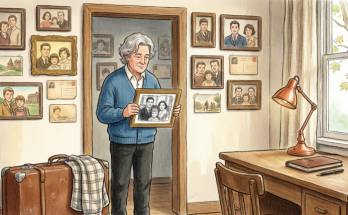
At thirty-eight, my life with Mark, my husband of fifteen years, felt comfortably etched into the suburban landscape of our lives. We had two teenagers – a daughter on the cusp of independence and a son still navigating the awkward beauty of adolescence – a mortgage, two cars, and the predictable rhythm of a couple who had built a life together from scratch. My work as a freelance architectural designer, conducted from the quiet solitude of my home office, allowed for a flexibility I cherished, a balance between creative pursuit and domesticity. Our marriage, while perhaps lacking the fiery passion of our early twenties, hummed with a quiet, dependable love, a deep-seated familiarity that I, perhaps foolishly, believed was unbreakable. It was a comfortable existence, one I’d worked hard to cultivate, a sanctuary from the unpredictable chaos of the outside world.
That sanctuary shattered five months ago, not with a bang, but with a deceptively gentle request at our kitchen table. Mark, usually so assured, looked at me with a rare flicker of vulnerability in his eyes, a look that twisted my gut with a premonition of disruption. “Sarah,” he began, his voice softer than usual, “I need to ask you a colossal favor.” He explained that his mother, Eleanor, had suffered a terrible fall – a slip on some icy steps outside her condo – resulting in a complex hip fracture and a concussion. The surgery had been successful, he assured me, but she couldn’t be left alone for weeks, possibly months. She would require round-the-clock assistance: help getting in and out of bed, meticulous adherence to a demanding medication schedule, preparation of nutritious meals, and transportation to numerous follow-up appointments. He painted a picture of frailty, of an elderly woman utterly dependent.
My mind immediately raced through the logistics. My current client workload was heavy, deadlines loomed, and our teenagers, despite their age, still required significant emotional and practical input. But Mark pressed on, his voice laced with an appeal that bypassed my logical brain and went straight for my inherent empathy. “Please,” he implored, reaching across the oak table to grasp my hand, his grip warm and insistent. “I don’t trust anyone else with her. Not a nurse. Not a facility. You’ll be here anyway, working from home. You’re family, Sarah. You know Mom. She loves you. No one could care for her like you could.” His words, carefully chosen, leveraged my compassion, my sense of duty, and even my affection for Eleanor, who had always been a kind, if sometimes particular, mother-in-law. Against my better judgment, against the quiet alarm bells ringing in the back of my mind, I found myself nodding, agreeing to what I believed would be a temporary, albeit challenging, act of familial devotion.
The reality, as it always does, swiftly eclipsed the romanticized notion of “caring for family.” Eleanor’s recovery was agonizingly slow, her pain constant, and her needs far more encompassing than Mark had let on. The first few weeks were a blur of sleepless nights, interrupted only by the insistent chime of medication alarms or Eleanor’s quiet calls for assistance to the bathroom. My days were a frantic dance between preparing pureed meals, coordinating physical therapy sessions, deciphering doctors’ instructions, and trying to salvage what little work I could squeeze in during her brief, drug-induced naps. My home office, once a sanctuary of creativity, became a neglected space, my design software gathering digital dust while I meticulously tracked Eleanor’s blood pressure and sugar levels. The emotional toll was immense, a constant draining of my own reserves as I became her sole emotional anchor, her confidante, and her tireless attendant. My children, usually so present in my daily life, began to feel like distant echoes, their school schedules and social lives carrying on without my full engagement, a sacrifice that gnawed at me constantly.
Mark, initially, had been a sporadic presence, offering a few hours of relief on weekends or handling a grocery run. But as the weeks bled into months, his support dwindled to almost nothing. His explanations grew increasingly elaborate: “an urgent client meeting” stretching late into the night, “a critical project” demanding overseas travel, “strategic planning sessions” requiring him to be unreachable. My exhaustion was so profound that I barely had the energy to question him, let alone challenge his increasingly flimsy excuses. I was trapped in a vortex of caregiving, isolated within the very walls of my home, watching my own life recede into the background. The once vibrant hum of our marriage had faded to a strained silence, punctuated only by Mark’s hurried goodbyes and Eleanor’s persistent needs. He transformed from my partner into a phantom, an infrequent visitor in the life we were supposed to be sharing.
Five months. Not the “few weeks” he had promised, but five grueling, soul-sucking months. I was a shadow of my former self, my creative spark extinguished, my body aching with chronic fatigue, and my spirit frayed to a threadbare existence. The house, once filled with the comfortable chaos of a family, now felt like a sterile sickroom, punctuated by the rhythmic beep of medical devices and Eleanor’s soft breathing. Mark’s absences became the norm, his phone calls guarded, his texts furtive. He started smelling different – a new, musky cologne I didn’t recognize, overlaid with something sweet, floral, definitely feminine. He’d shower immediately upon returning home, tossing his clothes directly into the laundry hamper with an unusual urgency. My exhaustion had previously dulled my senses, but now, a cold, creeping dread began to seep into the cracks of my weary mind. It was a gnawing suspicion, a whisper of betrayal I desperately tried to silence, convinced it was just the stress playing tricks.
The final straw came after one of his “business trips” – a supposed three-day conference in Chicago. He returned late on a Tuesday night, looking unexpectedly refreshed, almost buoyant, for someone who claimed to have endured grueling meetings. As he hugged me, a small, vibrant red lipstick stain, undeniably not mine, was smeared faintly on the collar of his crisp white shirt. It was barely visible, a ghost of a mark, but in that instant, my world tilted on its axis. The blood drained from my face, a cold wave washing over me, momentarily eclipsing all fatigue. My heart began to pound a frantic, furious rhythm against my ribs. The whispers in my mind coalesced into a deafening roar, confirming every suppressed fear, every dismissed intuition. This wasn’t stress. This wasn’t my imagination. This was real. And in that shattering moment of absolute clarity, staring at the tiny, crimson stain that sealed my husband’s deception, a dark, potent resolve began to crystallize within me, hardening my heart against the pain. I knew, with chilling certainty, that Mark had been off with another woman, while I, his devoted wife, was sacrificing everything to care for his mother. And I knew, just as certainly, that he would pay. Not with a confrontation, not with tears, but with a vengeance so precise, so devastating, it would strip him of the one thing he treasured above all else. I just needed to figure out what that was. And how to take it.
The lipstick stain. A minuscule smudge, yet it contained the weight of five months of betrayal, of my sacrificed life, of his callous indifference. My initial shock gave way to a chilling calm, a clarity born from the deepest hurt. The exhaustion that had been my constant companion dissolved, replaced by a surge of adrenaline, cold and precise. I didn’t scream, I didn’t weep; those were luxuries I couldn’t afford, not yet. Instead, a singular, burning question consumed me: *What did Mark prize most?* It wasn’t me, clearly. It wasn’t our marriage, or the well-being of his own mother, or even our children’s stable home life. No, Mark valued his image, his carefully curated facade of success, his perceived invincibility as a provider and a man of integrity. He loved the security, the respect, the power that came with his position as a Senior Partner at Sterling & Stone, a prestigious financial consulting firm. That was it. That was the one thing.
The next few weeks were a masterclass in silent espionage. While I continued my tireless duties for Eleanor, my mind worked with a ruthless efficiency. My architectural design work, once neglected, now served as a convenient cover, allowing me to spend hours at my computer, “working,” while I systematically delved into Mark’s digital and physical life. I started with the obvious: credit card statements, phone bills, shared cloud storage. His “urgent client meetings” and “overseas travel” always coincided with suspicious expenditures – boutique hotel stays in cities far from any Sterling & Stone offices, expensive dinners for two at restaurants I’d never heard of, a recurring charge from a high-end florist. I found a burner phone tucked away in a seldom-used desk drawer, revealing a torrent of affectionate texts and intimate photos with a woman named ‘Chloe.’ The evidence mounted, damning and irrefutable, painting a picture of a long-term, lavish affair, paid for with the very wealth I helped him accumulate, while I nursed his ailing mother.
My initial rage transformed into a cold, calculated resolve. I wouldn’t just expose his affair; I would dismantle his entire edifice of deceit. Mark’s position at Sterling & Stone was built on trust, integrity, and discretion – values he had flagrantly violated. His firm had a strict code of conduct, especially concerning the misuse of company resources and behaviors that could bring the firm into disrepute. The hotel stays, the travel, the lavish gifts – many of these were subtly interwoven with his business expenses, obscured by clever accounting. He was using his company’s resources, and the illusion of his professional obligations, to fund his infidelity. This wasn’t just personal betrayal; it was professional malfeasance. And I, with my meticulous eye for detail and newfound capacity for strategic thinking, was uniquely positioned to expose it.
I spent days meticulously compiling my findings, creating a dossier of his deception. Screenshots of texts, itemized credit card statements highlighting suspicious charges, copies of hotel bills, even GPS data from his car showing detours to Chloe’s apartment complex during alleged “late-night meetings.” I anonymized everything, creating a burner email address and routing my internet traffic through multiple VPNs. The goal wasn’t just to get him fired, but to ensure his departure was messy, public, and damaging enough to torpedo his career prospects elsewhere. I sent the package – a carefully curated selection of the most damning evidence – to Sterling & Stone’s anonymous ethics hotline, CC’ing a few key members of the board whose names I’d gleaned from his professional contacts. I included a short, sharp note, implying I was a concerned employee who had stumbled upon these irregularities, worried about the firm’s reputation.
The fallout was swift and spectacular. Within days, Mark was placed on administrative leave, pending an internal investigation. He stormed home, a pale, furious ghost of his former self, demanding to know what I had done. He accused me of hacking his accounts, of fabricating lies, his eyes wild with panic. “My career! My reputation! What have you done, Sarah?” he roared, the mask of the calm, collected businessman completely shattered. I met his gaze with a serene, unwavering stare. “I merely showed them the truth, Mark,” I replied, my voice steady, devoid of emotion. “The truth you worked so hard to conceal while I was nursing your mother back to health.” He was stripped of his company car, his corporate credit cards frozen, his access to firm systems revoked. The whispers started, spreading like wildfire through his professional network. His carefully constructed empire was crumbling, piece by piece.
The formal dismissal came two weeks later, not just for the affair, but for gross misuse of company funds and conduct unbecoming a partner. His severance was minimal, his reputation in tatters, his future in the high-stakes world of financial consulting utterly destroyed. He was unemployable in his field, too toxic, too much of a liability. When he finally crumpled onto the kitchen floor, defeated, head in his hands, begging me to retract whatever I had “sent,” it was then that I felt it – not triumph, but a quiet, profound sense of justice. “You took my time, my energy, my peace, and my belief in our future, Mark,” I said, looking down at him. “And you did it while I was caring for your mother, as you specifically asked. You asked me to be here. And I was. I just ensured you got what you deserved.”
The divorce was swift and uncomplicated, with Mark having little leverage or fight left in him. Eleanor, surprisingly, rallied significantly once Mark was home, his constant presence forcing him to take on some of her care, though I ensured a professional nurse was hired to provide the bulk of the support she still needed. My children, shielded from the uglier details but aware of their father’s disgrace, looked at me with a new respect, a quiet admiration for my strength. I sold the house, a place tainted by betrayal, and moved us into a smaller, sunnier home. My design work flourished, unburdened by caregiving and emotional turmoil. Mark lost everything he held dear – his career, his status, his financial security, and ultimately, his family. And as I watched him walk away from the courthouse, a broken, diminished man, I finally felt the weight lift. I had taken away the one thing he prized most, and in doing so, I had taken back my life.