Fourteen years. A lifetime, it felt like, woven from shared laughter over morning coffee, whispered secrets in the dark, and the comforting rhythm of everyday existence. Mark and I had built our world brick by brick, not just a house, but a home brimming with quiet understanding and unspoken promises. Our anniversary dinners at the little Italian place downtown, the annual summer trips to the Oregon coast, even the mundane task of grocery shopping felt sacred, imbued with the effortless camaraderie of two souls deeply intertwined. He was my anchor, my confidant, the steady hand I could always count on. I had pictured us growing old together, our hands gnarled with age but still clasped, watching the sunset from a porch swing, secure in the love we had meticulously cultivated.
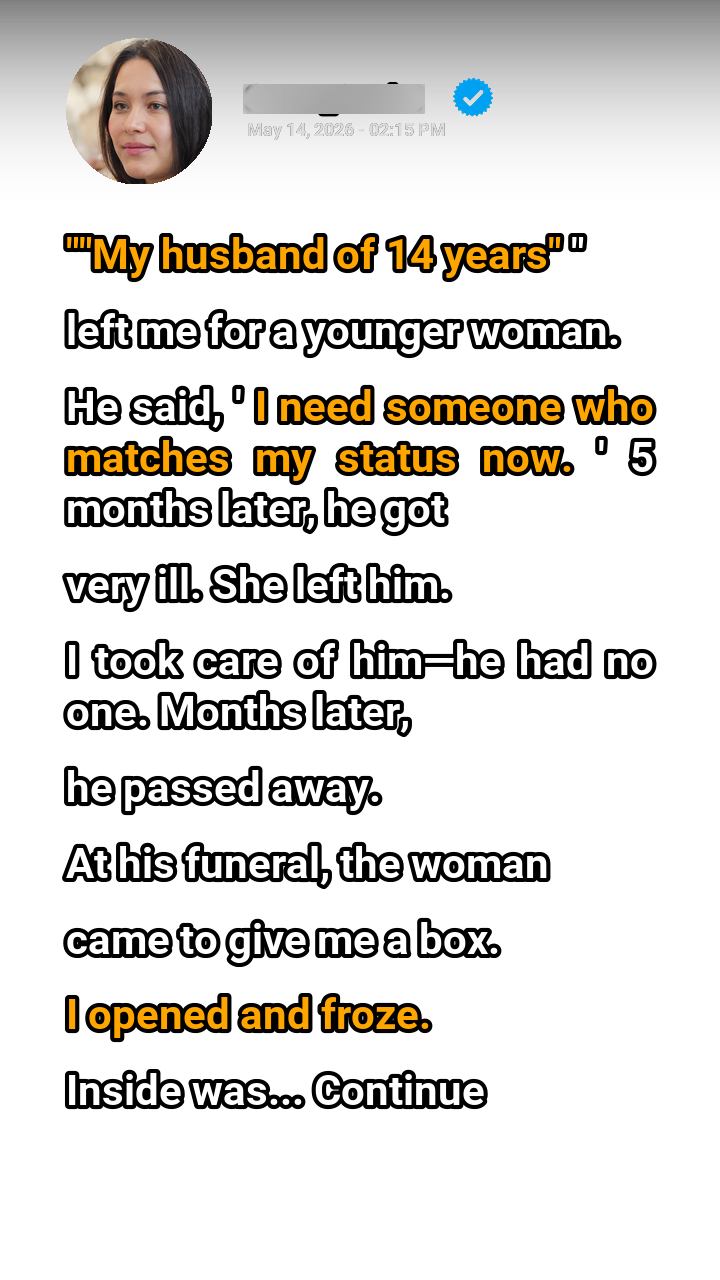
Then, the seismic shift. It wasn’t a slow erosion, but a sudden, brutal cleave that split my world in two. The scent of an unfamiliar perfume on his shirt, the late-night texts he tried to hide, the growing distance in his eyes – they were all prelude to the confession that ripped through the fabric of our shared reality. He stood before me, not with remorse, but with a chilling, almost clinical detachment, his gaze fixed somewhere beyond me, as if I were already a ghost. “Sarah,” he began, his voice devoid of the warmth I had known for so long, “I’m leaving. I need someone who matches my status now.”
The words hung in the air, sharper than any knife, carving an irreparable wound. *Status*. Fourteen years of devotion, of building a life, reduced to a mere mismatch of ‘status.’ It was a dismissal so profound, so utterly dehumanizing, that it stole the very air from my lungs. I remember the floor swaying beneath me, the room spinning into a vortex of disbelief and searing pain. The woman, a glossy, younger version of ambition, was already waiting in the wings, a stark, undeniable symbol of my sudden irrelevance. My hands had balled into fists, not in anger, but in a desperate attempt to hold onto something, anything, as my entire world dissolved around me.
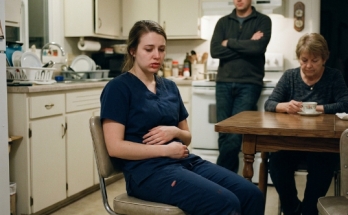
The months that followed were a blur of grief and a desperate scramble to reconstruct a sense of self from the shattered fragments of my former life. The silence in the house was deafening, each echo a cruel reminder of his absence. There were days I couldn’t get out of bed, consumed by the crushing weight of betrayal and the bewildering question of *why*. How could someone you loved so fiercely, trusted so completely, discard you with such callous indifference? The mirror showed me a stranger, hollow-eyed and lost, a stark contrast to the vibrant woman I had been.
But slowly, painstakingly, I began to pick up the pieces. I started painting again, a passion I’d abandoned for years, letting the vibrant colors express the emotions I couldn’t articulate. I reconnected with friends I’d inadvertently neglected, finding solace in their unwavering support. I volunteered at the local animal shelter, finding a quiet comfort in the unconditional love of creatures who asked for nothing but kindness. It wasn’t about forgetting Mark; it was about remembering Sarah, the woman I was before ‘we’ and the woman I needed to become again. A woman who, despite the gaping wound in her heart, still believed in her own inherent worth and the possibility of a future, even if it was one she had never envisioned.
Five months later, the universe delivered a cruel, poetic twist. The news filtered through our mutual acquaintances – hushed whispers of Mark’s sudden, severe illness. A rare autoimmune disease, aggressive and debilitating, that had struck him down with terrifying speed. The ‘status’ he’d chased so relentlessly had evaporated, replaced by hospital beds, IV drips, and a prognosis that painted a grim future. He was no longer the powerful, ascendant figure he had so desperately wanted to project.
And just as swiftly as she had appeared, the ‘younger woman,’ whose name I had never bothered to learn, vanished. Her departure was as swift and calculated as her arrival, leaving him utterly alone, stripped of the very ‘status’ she had so eagerly attached herself to. The irony was a bitter pill, a chilling testament to the superficiality that had driven him away from me. Part of me, a dark, bruised part, wanted to revel in it, to see it as justice served. But another, deeper part, the part that had loved him for fourteen years, felt a pang of something akin to pity, tangled with an uncomfortable sense of responsibility for a life that had once been so inextricably linked with mine.
The calls started coming from the hospital, desperate pleas from nurses who knew our history, informing me he had no one else listed as next of kin, no one to make decisions, no one to even visit. The battle within me was fierce. Every fiber of my being screamed to turn away, to let him face the consequences of his choices alone. But the image of him, vulnerable and abandoned, replaced the image of the cruel man who’d left me. The Sarah who believed in kindness, in humanity, in the sanctity of a life once intertwined with hers, won out. It was not for him, I told myself, but for the person I still chose to be.
I began to visit, then to manage his care, eventually moving him to a specialized facility where I spent countless hours by his bedside. There were no grand apologies, no dramatic reconciliations. Just quiet moments, sometimes painful, sometimes filled with an unspoken understanding as his body failed him. I held his hand as the disease slowly, relentlessly, stole him away, watching the vibrant man I had once known fade into a shadow. And months later, with only the soft beep of monitors for company, Mark drew his last breath, his hand still warm in mine, a silent testament to a journey that had come full circle in the most unexpected way.
The funeral was a small, somber affair. A scattering of distant relatives, a few old colleagues, and me. I stood by the grave, a widow in black, feeling a complex tapestry of emotions: grief for the man he once was, relief for his suffering ended, and a strange, quiet acceptance of the twisted path our lives had taken. As the first handful of earth was scattered, a shadow fell over the grave. I looked up, and there she was. The younger woman. Her face, usually so composed and polished, looked strangely drawn, her eyes red-rimmed, though whether from genuine sorrow or the residual shock of Mark’s demise, I couldn’t tell.
She approached me hesitantly, clutching a small, elegantly wrapped box to her chest, her gaze flickering between me and the freshly turned earth. A wave of ice washed over me. What could she possibly want now? What final indignity was this? My heart hammered against my ribs, bracing for some cutting remark, some last attempt to assert her fleeting claim.
She stopped a few feet away, extending the box with a trembling hand. “He… he asked me to give this to you, if anything happened,” she whispered, her voice barely audible above the rustling leaves. “Said it was important. Only for you.” I took the box, its weight surprisingly substantial, the silk ribbon cool against my fingers. My mind raced, trying to decipher this final, cryptic message from a man who had left me with so much pain. Was it a posthumous apology? A legal document? Another cruel reminder of his ‘status’? I retreated from the graveside, the small, ornate box clutched tight, seeking the quiet solitude of my car. My hands, still trembling from the raw emotions of the day, fumbled with the delicate ribbon. I peeled back the elegant paper, my breath catching in my throat as the lid lifted. And then, I froze. My vision tunneled, the world outside the car window blurring into an indistinct haze. Inside, nestled on a bed of dark velvet, lay…
Inside, nestled on a bed of dark velvet, lay a small, intricately carved wooden bird. It was a common tern, its wings spread as if in mid-flight, its tiny, delicate features rendered with loving detail. My breath hitched. The Oregon coast. Our first summer trip, fourteen years ago, before the world had fractured. We’d bought a similar carving from a local artisan, a whimsical reminder of the endless grey skies and the roar of the Pacific. This one, though, looked older, more worn, as if it had been handled often, its edges softened by countless touches. Beneath the bird, a faded photograph lay face down. My hands, still shaking, carefully lifted the carving. It felt cool and smooth against my fingertips, a tangible ghost from a happier past. I turned over the photograph. It was me. Young, vibrant, laughing, my hair wild in the wind, standing on a beach, the unmistakable coastline in the background. It was from that very trip. A wave of profound, aching nostalgia, mixed with a fresh surge of betrayal, washed over me. Why *this*? What twisted game was he playing, even from beyond the grave?
Then I saw it. Tucked beneath the photograph, almost hidden by the velvet, was a folded piece of paper. It was an envelope, yellowed with age, addressed simply “Sarah” in Mark’s familiar, elegant script, but a script from many years ago. My heart hammered, a frantic drum against my ribs. This wasn’t recent. This was old. My fingers fumbled with the brittle paper, tearing slightly as I opened it. Inside was a single, densely written letter, the ink faded but still legible, dated exactly one week before he proposed to me.
I unfolded the letter, my eyes scanning the familiar handwriting, a tremor running through me as I absorbed the words. It wasn’t an apology for leaving. It was a confession. A confession of his deep-seated insecurities, his paralyzing fear of inadequacy. He wrote about his humble beginnings, the constant gnawing pressure to prove himself, to be ‘worthy’ of the life he envisioned, and, more painfully, worthy of *me*. He spoke of his love for me, a love he called “pure and uncomplicated,” but admitted he believed it wasn’t enough. He felt he needed to achieve ‘status,’ not because I lacked it, but because *he* believed *he* lacked it, and that one day, I would realize I deserved more than he could offer without it. He wrote about a desperate, misguided plan to climb the corporate ladder, to acquire wealth and influence, believing that only then would he be truly deserving of our life together. The letter ended with a heartbreaking plea to himself, a promise to always remember what truly mattered, even as he embarked on a path he feared would change him.
The words “I need someone who matches my status now” echoed in my mind, but now they were twisted, recontextualized. They weren’t a dismissal of *my* status, but a desperate, self-loathing declaration of *his own perceived lack*. He hadn’t left me because I wasn’t enough; he had left because *he* believed *he* wasn’t enough, and he pursued ‘status’ as a desperate means to fill that void, thinking it would ultimately make him better, more complete, *for me*. The irony was a bitter, choking taste in my mouth. He had sacrificed everything, including us, for a mirage, for an external validation that proved utterly meaningless in the face of true human suffering and connection.
As I continued to read, a more recent addendum, scrawled hastily in the margins with a different, weaker pen, appeared. It was dated just weeks before his death. In it, he confessed his profound regret, his realization during his illness that the ‘status’ he chased was “worthless dust.” He wrote about watching me care for him, “a ghost of the woman I hurt so deeply, yet still, the only true anchor in my storm.” He acknowledged the pain he caused, the unforgivable cruelty of his departure, and admitted that the younger woman had been nothing more than a symbol, a temporary validation of the empty life he was building. He wrote that giving me the box, with the bird and the old letter, was his final, desperate attempt to show me that, beneath all the ambition and the terrible mistakes, a part of him had always remembered what truly mattered, and that he had loved me, in his own deeply flawed way, until the very end. He asked for no forgiveness, only for me to understand the depth of his brokenness.
A guttural sob escaped me, tearing through the quiet sanctuary of the car. It wasn’t just grief; it was a profound, wrenching ache for the man he had been, the man he tried to be, and the man he ultimately failed to become. The anger, the hurt, the betrayal – they were still there, sharp and undeniable – but now they were intertwined with a devastating pity, a sorrow for a soul so tormented by its own insecurities that it destroyed the very love it coveted. He hadn’t been a villain, not entirely; he had been a deeply flawed, broken human being, lost in a chase for something that could never truly fulfill him. The “I froze” wasn’t just shock at the contents, but at the shattering of a simpler narrative, replaced by a complex, tragic truth.
I looked up, through the blurred car window. The younger woman was gone, a fleeting shadow, irrelevant now. I was left alone with the box, the carved bird, the faded photograph, and the letters that spanned a lifetime of love, ambition, and regret. The true ‘status,’ I realized, wasn’t about wealth or power, but about the resilience of the human heart, the unwavering kindness I had shown, and the quiet dignity with which I had rebuilt my life. Mark’s final message wasn’t an absolution, but a profound, albeit painful, closure. I started the engine, the small, heavy box resting on the passenger seat, a silent testament to a journey that had come full circle, leaving me not with answers, but with a deeper, more nuanced understanding of the twisted, beautiful, and heartbreaking tapestry of love. My world was no longer fractured; it was simply, irrevocably, changed.