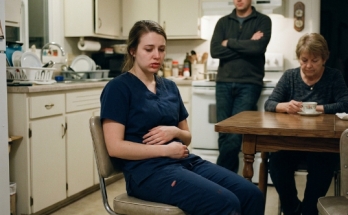
The memory was a shard of glass embedded deep within me, perpetually glinting with a cold, unforgiving light. Ten years ago, my life was a meticulously crafted tapestry of suburban bliss: a sun-drenched home filled with laughter, a husband whose touch ignited a warmth that settled deep in my bones, and a sister, Amelia, who was not just family, but my confidante, my shadow, my other half. We’d shared bunk beds and secrets, dreams and heartbreaks. Our bond felt unbreakable, a sacred vow etched into the very fabric of our existence. That morning, I walked into our master bedroom, a cup of coffee in hand, ready to surprise Daniel with breakfast in bed. The scent of our favorite blend, usually a comforting aroma, twisted into something acrid, nauseating, as my eyes registered the impossible, the grotesque tableau unfolding on the pristine white sheets of *my* bed. There they were, Daniel and Amelia, entangled in a silent testament to a betrayal so profound it felt like the earth itself had cracked open beneath me. The coffee cup slipped from my numb fingers, shattering against the hardwood floor, a sound that echoed the violent splintering of my entire world.
There was no scream, no dramatic confrontation. Just a suffocating silence, a void where my breath should have been. The air was thick with the stench of infidelity, a poison that seeped into every pore. In that single, agonizing second, the people I loved most ceased to exist. They became ghosts, specters of a life I could no longer claim. The decision was swift, brutal, and absolute. Within a week, the divorce papers were filed, my name legally changed back to my maiden surname, my phone number eradicated from every contact list I’d ever shared. I severed ties with every single person who dared to question my judgment, who suggested forgiveness, who even uttered Amelia’s name in my presence. I cut off my parents, my aunts, my cousins – anyone who formed part of the shared past, a past now tainted beyond redemption. I built an impenetrable wall around myself, brick by painful brick, each one cemented with the concrete conviction that they were both dead to me. Not metaphorically, not emotionally, but truly, utterly, irrevocably gone.
For an entire decade, I cultivated a life of deliberate solitude. My days were structured, predictable, devoid of the emotional volatility that had once defined my vibrant existence. I moved to a different state, took a demanding job that consumed my waking hours, and found solace in the quiet anonymity of a new city. Every photograph, every letter, every tangible reminder of Daniel or Amelia was systematically purged, burned, or buried in the deepest recesses of my memory, sealed shut with an iron will. Their names became unspeakable, their faces blurred into indistinct shadows. I became an expert at deflection, at changing the subject, at constructing polite but firm boundaries whenever a new acquaintance inadvertently stumbled upon the topic of family. The emotional armor I wore was formidable, polished over ten years of unyielding self-preservation. I genuinely believed I had succeeded, that the Amelia who had once been my sister had been successfully extinguished from my heart, replaced by a hardened shell of indifference.
Then, last month, the past violently breached my carefully constructed defenses. It was a call from my mother, a voice I hadn’t heard in ten years, laced with a tremor that cut through my composure like a razor. “Evelyn,” she choked out, “it’s Amelia. She… she died. In childbirth.” The words hung in the air, surreal and distant. A baby. Amelia had a baby. My initial shock was quickly replaced by a familiar surge of cold resolve. My mother, desperate, pleaded with me to attend the funeral, to offer some semblance of closure, to acknowledge the passing of the woman who was, despite everything, my sister. My response, delivered in a voice so devoid of emotion it barely sounded like my own, was unwavering: “She’s been dead to me for years, Mother. And that hasn’t changed.” I hung up, convinced of my strength, of the righteousness of my decade-long grievance, and went about my day, determined not to let this belated tragedy chip away at the fortress I had built.
The following morning, a crisp autumn day that mocked the turmoil within me, a sharp, insistent rap echoed through my quiet apartment. I rarely had visitors, and my heart gave an involuntary lurch. Through the peephole, I saw a man in a dark, impeccably tailored suit, holding a slim leather briefcase. He looked official, somber, and utterly out of place on my doorstep. When I cautiously opened the door, he introduced himself as Mr. Henderson, an attorney from a firm I didn’t recognize. His gaze was professional, yet held a hint of something more, a careful assessment that unnerved me. He held out a thick, cream-colored envelope, its edges softened with wear, and said, his voice low and respectful, “Ms. Hayes, your sister, Amelia Vance, left this for you. It was her dying wish that you receive it personally.” The sound of her full name, uttered by a stranger, was like a physical blow, a ghost from the past finally materializing on my very threshold.
Every instinct screamed at me to slam the door shut, to refuse the envelope, to maintain the perfect, unblemished sanctity of my isolation. But something held me captive – a flicker of morbid curiosity, perhaps, or a subconscious thread of the sister I had so fiercely loved, refusing to be completely severed. My hand, trembling almost imperceptibly, reached out and took the envelope. Its weight felt significant, heavy with unspoken words, with a history I had tried so desperately to erase. I retreated into my apartment, the lawyer’s polite farewell fading behind me, the envelope clutched in my hand like a dangerous artifact. I sank onto my sofa, staring at the elegant, familiar script of my sister’s handwriting on the front, addressed simply to “Evelyn.” With a deep, shuddering breath, I tore open the seal. The first page was a letter, folded meticulously. My eyes scanned the opening lines, and the carefully constructed walls of my decade-long conviction began to crumble, not with a crash, but with an insidious, terrifying whisper: “My dearest Evelyn, if you’re reading this, I know you still hate me. But please, you have to understand. What you saw that day wasn’t what you thought. It was never what you thought. He didn’t just break your heart, Evelyn; he broke *me* too. Every single choice, every agonizing moment leading up to that horrific morning, was a desperate act of survival, a desperate attempt to protect you from a monster whose grip was far tighter than you could ever imagine…”
The words twisted in my gut, a slow, agonizing turn that made the blood drain from my face. Daniel. A monster. The man I had loved, the man I had believed in, was not merely a philanderer but a predator. Amelia’s letter unfolded a chilling narrative of psychological manipulation, of threats whispered low enough to shatter a soul but loud enough to be heard across a room, of a web of fear so intricate and pervasive that escape seemed impossible. He had, Amelia confessed, discovered a secret from her past – a youthful indiscretion, a moment of vulnerability – and twisted it into a weapon. He threatened to expose her, to ruin her burgeoning career, to destroy her reputation, and, most cruelly, to implicate her in a fabricated scandal that would inevitably drag my name through the mud as well. “He told me,” she wrote, her elegant script wavering slightly on the page, “that if I didn’t comply, if I didn’t do exactly what he asked, he would make sure you lost everything. Your job, your home, your peace. He said he would make sure you believed I betrayed you, that we were both against you, and that he would leave you utterly alone, with no one to turn to. He wanted to break both of us, Evelyn, but he especially wanted to isolate you.”
My fingers tightened around the paper, crinkling it slightly. The scene in my bedroom, the image that had haunted my every waking moment for a decade, replayed itself, but this time, the lens was entirely different. It wasn’t a scene of illicit passion, but one of terror, of a sister trapped, forced into an unthinkable act under duress, all to protect *me*. The ‘betrayal’ wasn’t an act of malice, but a desperate, agonizing sacrifice. Amelia described how Daniel had orchestrated the entire morning, knowing my routine, ensuring I would walk in on them. It wasn’t about love or lust between them; it was a calculated act of cruelty, a performance designed to shatter me and cement his control over her. He had wanted me to find them, to witness the ‘betrayal,’ believing it would ensure my complete emotional devastation and make me leave, taking the perceived threat I posed to his manipulation of Amelia out of the equation. He wanted to watch my world burn, and he had used my sister as the match.
The revelation didn’t break me, not in the way one might expect. There were no immediate tears for Amelia, no sudden surge of grief. Instead, a cold, searing fire ignited in my chest, a white-hot fury directed solely at Daniel. The decade of self-imposed exile, the carefully constructed walls, the bitter indifference I had cultivated – it all felt like a grotesque joke played on me by a ghost I hadn’t truly understood. I hadn’t been punishing *them*; I had been allowing Daniel’s manipulation to continue its devastating work, destroying my relationship with the one person who had been trying to shield me. The hatred I had harbored for Amelia evaporated, replaced by a profound, sickening wave of shame and regret. How could I have been so blind? How could I have let my pain overshadow the possibility of a deeper, more sinister truth? My fortress hadn’t been protecting me; it had been imprisoning me, keeping me from the truth, from understanding, from forgiveness.
The letter continued, her voice echoing in my mind, softer now, tinged with an almost unbearable weariness. “I’m so sorry, Evelyn. I tried to tell you, but he was always there, always watching. After you left, his grip tightened. He never let me go. I lived in a cage of his making, but I never stopped thinking of you, never stopped loving you.” Then came the part that stole my breath, the lines that Amelia had clearly agonized over. “There’s something else, Evelyn. Something I couldn’t escape. A child. His child. A baby girl. She’s due any day now. I know this is an unbearable ask, but please, my final wish, my only hope, is that you care for her. She is innocent in all of this. She deserves a chance at a life free from his shadow, a life filled with real love. Her name is Lily. Please, Evelyn, she has your eyes. Exactly like yours.”
My eyes blurred, the words swimming on the page. A baby. Amelia’s baby. Daniel’s baby. A fresh wave of nausea washed over me. How could I, after all this, after the decade of self-imposed barrenness, be asked to embrace the living embodiment of my greatest trauma? But then, her words, “She has your eyes. Exactly like yours,” resonated deeper than the pain. It wasn’t just Daniel’s child; it was a piece of Amelia, a final, desperate plea from the sister who had loved me enough to endure unimaginable torment. A small photograph fluttered from the folds of the letter as I unfolded the last page. It was a sonogram, grainy and ethereal, but undeniably, unmistakably, a tiny human form. And below it, a hastily scrawled note from Amelia: “I see you in her, Ev. I know you’ll know what to do.”
My hands trembled as I carefully refolded the letter, placing the sonogram back inside. The lawyer’s details for contacting the orphanage where Lily was temporarily placed were included on a separate card. The silence in my apartment was deafening, yet within it, I heard Amelia’s voice, clear as day, urging me, trusting me. The walls I had built, once so impenetrable, now felt like crumbling sand. The ice around my heart began to thaw, not with the gentle warmth of spring, but with the scorching heat of a thousand truths colliding. My life, the one I had meticulously crafted over ten years, the one I thought was safe and righteous, was indeed not what I thought it was. It was a monument to a lie.
I stood up, walking to the window, looking out at the crisp autumn day. The world outside looked the same, but my internal landscape had been irrevocably altered. A child. Lily. A baby with my eyes. My sister’s last wish. It wasn’t a burden; it was a lifeline, a chance for redemption, a way to truly honor Amelia, to reclaim the love and connection I had so fiercely severed. The fortress was gone, replaced by an aching, terrifying, yet undeniably powerful sense of purpose. I had been dead to the world for ten years, but now, holding Amelia’s letter, I felt a flicker of life, a fragile, desperate hope. I picked up my phone, my fingers hovering over the contact number for the lawyer. My journey wasn’t over; it was just beginning, and this time, I wouldn’t run.