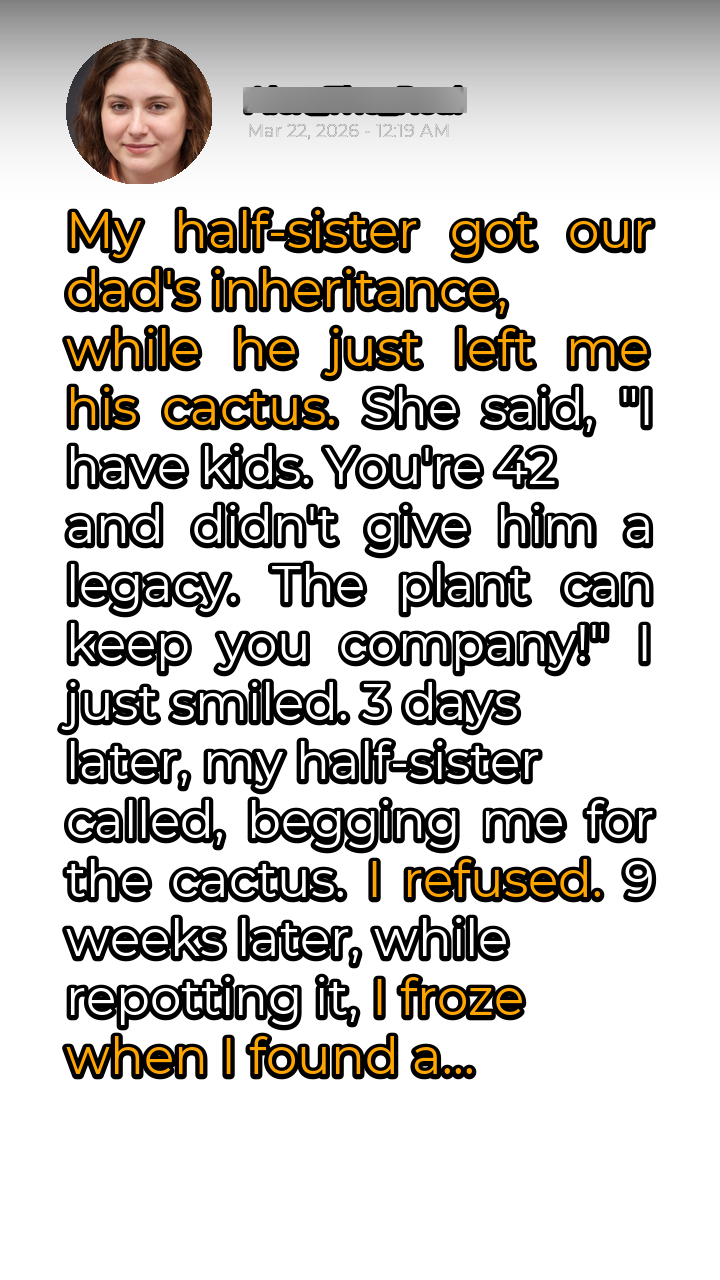
The reading of the will had been a carefully orchestrated performance of family dynamics. My half-sister, Bethany, arrived with her two children in tow, radiating an air of smug confidence. She had always been the favored child, the one who followed the expected path, the one who provided grandchildren. I, on the other hand, had chosen a different route, one that prioritized personal fulfillment over societal expectations. I was forty-two, single, and content with my life, a fact that Bethany clearly viewed as a personal failing. The lawyer’s pronouncements confirmed her expectations. The bulk of the estate, a considerable sum accumulated over a lifetime of hard work, was to be divided between Bethany and her children. A smaller portion was allocated to various charities, and then came the final, almost dismissive clause: “To my son, Daniel, I leave my prized Cereus cactus.”
Bethany barely concealed her laughter. “Well, Danny,” she said, her voice dripping with condescension, “at least you’ll have something to keep you company. After all, you don’t have a legacy to leave behind.” I simply smiled, accepting the terracotta pot with its spiky inhabitant. The injustice of it all was evident. I knew our father loved us both, but the societal pressure of grandchildren clearly influenced his decision. As Bethany paraded off with her newfound fortune, I was left to tend to my cactus, not knowing the surprise it held.
I placed the cactus on my windowsill, a silent green sentinel overlooking the world. I watered it sparingly, remembering my father’s instructions. He had always been a man of few words, but he had a deep appreciation for the resilience and quiet beauty of desert plants. As the weeks passed, I found a strange comfort in its presence. It was a tangible link to my father, a reminder of his quirky sense of humor and his unspoken love. I even started talking to it, sharing my thoughts and frustrations, knowing it would never judge or offer unsolicited advice.
One Saturday morning, I decided it was time to repot the cactus. It had clearly outgrown its current container. As I carefully loosened the soil, I noticed something odd near the bottom of the pot. It was a small, tightly wrapped package, concealed amongst the roots. My heart began to race. I carefully unwrapped the package, my fingers trembling with anticipation. Inside, nestled in a bed of cotton wool, was a folded document.
It was the original will, the one my father had drafted years before, before Bethany’s children had arrived on the scene. And the words leapt off the page, clear and unambiguous: “I leave my entire estate to my son, Daniel.” A codicil, dated just weeks before his death, explained his reasoning. He had seen Bethany’s greed, her entitlement, and he had realized that his fortune would be squandered on frivolous pursuits. He trusted me, he wrote, to use the money wisely, to pursue my passions, and to make a positive impact on the world.
The phone rang, shattering the silence. It was Bethany, her voice frantic. “Daniel,” she said, her tone a stark contrast to her earlier smugness, “I need to talk to you about the cactus. I… I think I made a mistake. The kids really love plants, and I was wondering if you’d be willing to… to give it back?”
I paused, savoring the moment. “I’m sorry, Bethany,” I said, my voice calm and resolute. “The cactus is very precious to me. It’s a reminder of my father, and I intend to keep it.” The line went dead. The sweet taste of justice washed over me. My father knew Bethany would try to take advantage, so he hid the real will in the one place she’d never think to look: with the thing she deemed worthless.