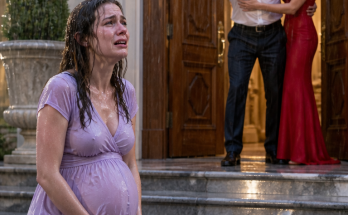
When I was 17, my dad didn’t just walk out. He obliterated our lives. He didn’t just leave my mom and me for his young mistress; he systematically drained our savings, cashed out our investments, and skipped every house payment until the bank foreclosed. We went from a comfortable home to a cold park bench overnight. He looked us in the eye, or rather, avoided our eyes, then vanished. Didn’t bat an eye. We were left with nothing, on the street, and he didn’t care. Gosh, it was a NIGHTMARE. The stench of stale cigarettes and desperation in those shelters, the gnawing hunger, my mother’s quiet, broken sobs every night. Those memories are burned into my soul. I remember her, huddled beside me, pretending to sleep, while I could feel her body shaking with silent grief. My own heart hardened into a stone. I swore on everything holy that I would get even someday. I fantasized about it, about facing him, about him seeing what he’d done.
We barely survived. My mom, God bless her, found minimum wage jobs, cleaned houses, did anything to put food on our table. I worked odd jobs after school, too. We clawed our way back, slowly, painfully. But the bitterness, it festered inside me. It was a poison I couldn’t purge, a dark promise I kept to myself. Every achievement, every small victory, felt tainted by the ghost of his betrayal.
Decades passed. I built a good life for myself, far away from that old pain, or so I told myself. I had a home, a career, a stability he’d stripped from me. Yet, the image of him, the villain I’d constructed, remained vivid. The thought of revenge never truly faded. It was a dull ache, a phantom limb of my youth.
Then, one brisk autumn afternoon, I saw him. Not in a dramatic confrontation, but in the most ordinary, heartbreaking way. I was at the local community center, volunteering, when I noticed an old man slumped on a bench in the garden. His clothes were threadbare, his hair a thin white wispy halo around a gaunt face. No, it couldn’t be. My breath hitched. He looked familiar in the way a distorted memory does.
He wasn’t the strong, confident man who’d abandoned us. This man was shrunken, his shoulders bowed, his hands gnarled with age. There was a profound exhaustion etched into every line of his face. My heart pounded, a frantic drum in my chest. It WAS him. The rage, the hate, they flared, then died, replaced by a terrible, cold shock. He looked like a ghost haunting his own life.
He wasn’t alone. Next to him, tucked under a worn blanket, was an older woman, perhaps in her late fifties, early sixties, frail and pale. She was in a specialized wheelchair, her head lolling to one side. Ah, the mistress, my bitter mind supplied, older, ravaged by time, just like him. He was gently spoon-feeding her something from a thermos, his movements slow, meticulous. His eyes, though weary, held a tenderness I’d never once witnessed directed at my mother or me.
I watched, hidden by a rose bush, my body frozen. My blood ran cold as I heard him murmur, “Just a little more, my dear. You need your strength.” His voice was gravelly, broken. Then, she mumbled something, her words slurred and indistinct. But one word, a single syllable, cut through the quiet like a knife: “…brother?”
My entire world tilted. The rage, the decades of righteous anger, evaporated in an instant, replaced by a sickening dread. I crept closer, desperate, my mind screaming for clarity. A volunteer approached them, gently covering the woman with an additional blanket. “How is she today, sir? Martha feeling alright?” Martha. My aunt. My father’s younger sister, who’d been diagnosed with a rare, rapidly progressing degenerative disease when she was barely an adult. The one we were told had moved far away, to a special facility in another country.
The truth, a monstrous, devastating truth, slammed into me like a physical blow. He hadn’t run away with a lover; he’d sacrificed everything—his family, his home, his reputation—to care for his dying sister. The drained finances, the skipped payments, the sudden disappearance… it wasn’t for a new life of luxury. It was for Martha. For her treatments, her care, the impossible costs of trying to keep her alive. He chose to be the villain, to bear our hatred, so we wouldn’t be burdened, so we wouldn’t have to face the impossible choice or the crushing financial ruin. He let us believe the worst, so we could move on, unburdened by his unbearable secret.
Karma hadn’t beaten me to it. Karma had shown me a truth infinitely more shattering than any retribution I could have ever imagined. My father, my broken, silent father, who bore the weight of that secret, who had given up everything he held dear to protect us from an impossible reality. My lifetime of hatred, of wishing him ill, collapsed into a tidal wave of grief so profound it threatened to drown me. I never got to tell him I understood. I never got to apologize for all the hate. I never got to know him, truly know him, until it was too late. The true nightmare wasn’t being left. It was the lifetime of misunderstanding. It was realizing the man I hated was a hero, and I never, EVER knew.