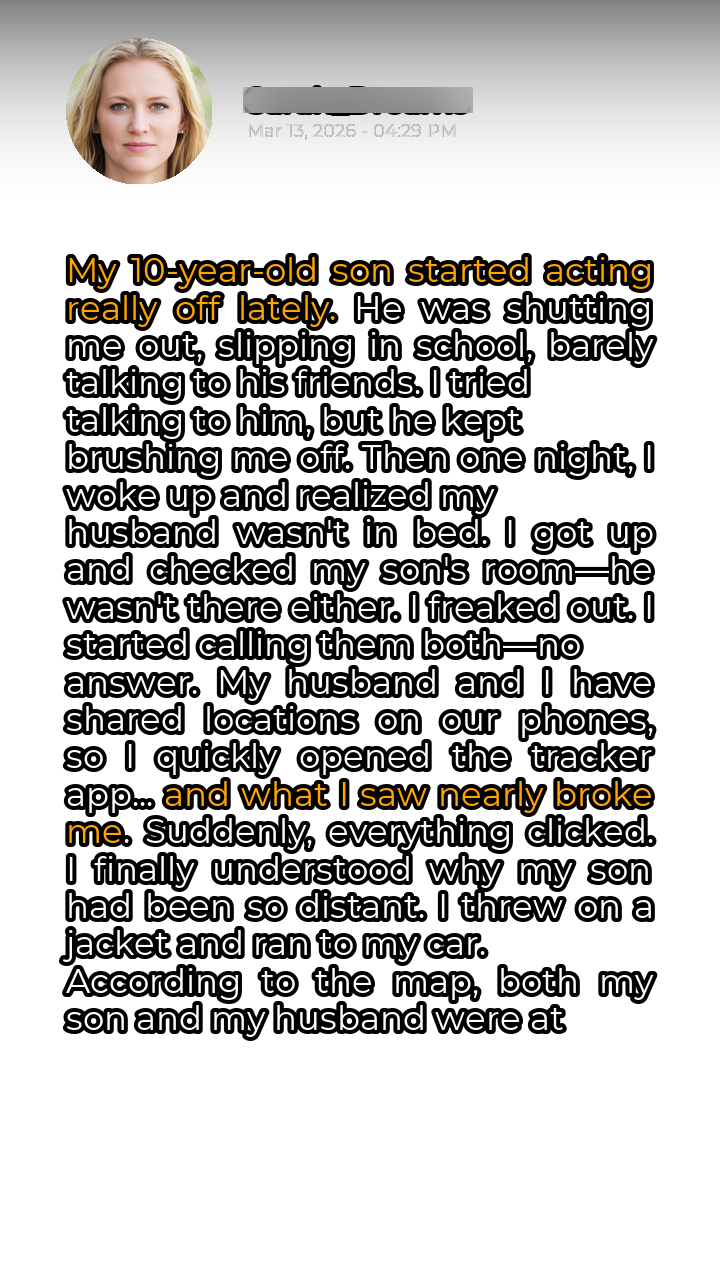
The shift in my son, Ethan, had been gradual, like the slow fade of summer into autumn. He was ten, a pivotal age where childhood still clung, but the first tendrils of adolescence were beginning to unfurl. Yet, this wasn’t a typical growing pain. It was a withdrawal, a retreat into himself that left me, his mother, standing outside the fortress of his heart, knocking and receiving no answer. His grades, once stellar, began to slip. He used to bound through the door after school, eager to share stories of his day, but now he trudged in silence, avoiding eye contact, retreating to his room. I tried everything. Gentle inquiries, probing questions, even attempts at shared activities, but each effort was met with a wall of silence or a dismissive shrug. My husband, David, initially brushed it off as a phase, a temporary blip on the radar of childhood. But even he began to express concern as Ethan’s behavior became more entrenched. We had always been a close-knit family, open and communicative. This sudden chasm felt alien and terrifying. The nights were the worst, filled with anxiety and the gnawing feeling that something was terribly wrong.
Then came the night that shattered the fragile illusion of normalcy. I woke up disoriented, the silence of the house pressing in on me like a suffocating blanket. David wasn’t beside me. A quick check of the bathroom, the living room, confirmed my growing unease. He was gone. Panic began to claw at my throat. My next instinct was to check on Ethan. His bed was empty, the sheets rumpled, as if he had recently been there. The window was closed, but a chilling draft snaked through the room, leaving goosebumps in its wake.
My mind raced, conjuring worst-case scenarios. Had they been kidnapped? Was there an emergency? I frantically dialed David’s number, then Ethan’s old phone, the one we kept for emergencies. Both calls went straight to voicemail. My heart hammered against my ribs, a frantic drumbeat of fear. Then, I remembered the phone tracker, a feature we had enabled for safety, a silent guardian watching over our loved ones. With trembling fingers, I opened the app, my eyes scanning the map.
The image that materialized on the screen stole the air from my lungs. Two blips, two familiar icons, clustered together in a location that made no sense: a fertility clinic on the other side of town. David and Ethan were together, in the middle of the night, at a place dedicated to helping people conceive. My mind struggled to process the information, to reconcile the reality on the screen with the image of my family that I held so dear. What could they possibly be doing there?
The pieces of the puzzle began to fall into place, forming a picture that was both shocking and deeply unsettling. Ethan’s withdrawal, his secrecy, the late nights I had dismissed as teenage angst. It all pointed to a secret, a shared burden that he had been carrying alone. My husband, the man I trusted implicitly, had been complicit in this deception, drawing our son into a world that no ten-year-old should ever have to navigate.
Driven by a mixture of anger, betrayal, and a desperate need for answers, I threw on a jacket and raced to my car. The drive to the clinic was a blur, my mind replaying fragments of conversations, searching for clues that I had missed, signs that I had ignored. As I pulled into the parking lot, I saw David’s car, its familiar silhouette a stark reminder of the lies that had been woven into the fabric of our lives. I found them inside, sitting in a waiting room, Ethan looking pale and drawn, David with his arm around him, offering a strained smile. As they saw me, their faces registered a mixture of guilt and fear. The revelation was simple, yet devastating: David, unable to have children naturally, had secretly used Ethan as a sperm donor. This explained everything: The clinic visits, the money, and Ethan’s recent behaviour.