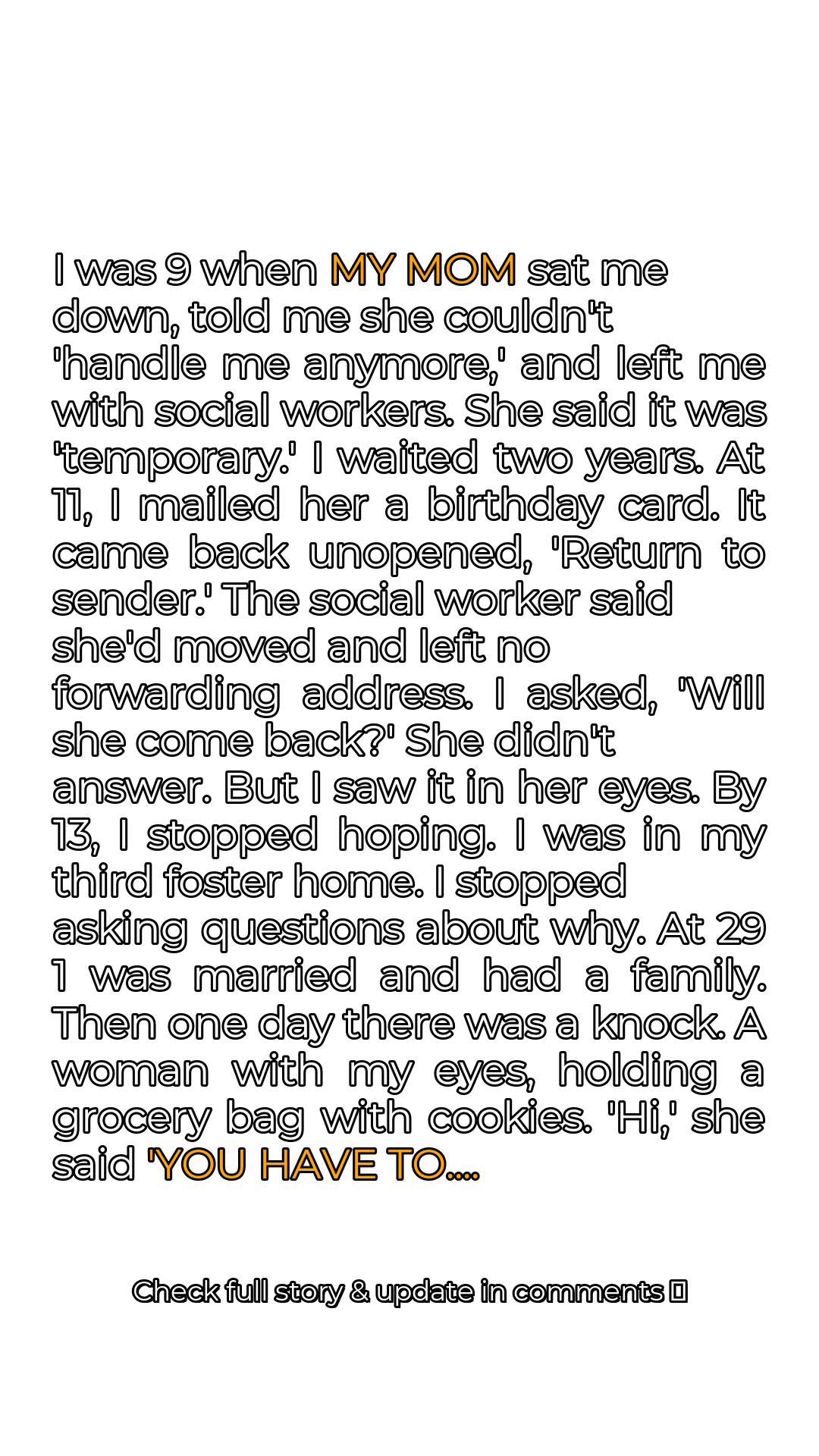
The memory is seared into my mind, an indelible mark of abandonment. I was nine years old, a tender age when a mother’s love is supposed to be a constant, unwavering presence. Instead, I was summoned to the living room, where my mother sat with a grave expression, ready to deliver a blow that would shatter my world. The words she spoke that day still echo in my nightmares, a constant reminder of the day my life irrevocably changed. She told me, in a voice devoid of warmth, that she “couldn’t handle me anymore.” As if I were some unruly pet or a burdensome chore. Those words pierced through me, leaving me gasping for air. Before I could fully grasp the weight of her statement, she handed me over to social workers. I remember the sterile environment of their office, the cold, impersonal questions, and the suffocating fear that gripped me as I realized my mother was walking away.
The next two years were a blur of temporary homes and fleeting connections. Each foster family, while well-intentioned, only amplified the void my mother had left behind. I clung to the hope that her departure was indeed temporary, that she would one day return to claim me, to undo the damage she had inflicted. Every birthday, every holiday, I found myself gazing out the window, yearning for a glimpse of her familiar face.
On my eleventh birthday, fueled by a desperate longing, I decided to send her a card. It was a simple, heartfelt message, filled with a child’s unwavering love. I carefully addressed the envelope and walked to the mailbox, my heart pounding with anticipation. Weeks turned into months, and the card remained unanswered. Then, one fateful day, it arrived back, stamped with the cold, indifferent words: “Return to Sender.”
The social worker tried to soften the blow, but her words were like salt in an open wound. She explained that my mother had moved, leaving no forwarding address, no way for me to contact her. The realization that she had intentionally severed all ties was devastating. I remember asking the question that haunted my every waking moment: “Will she come back?” The social worker avoided my gaze, her silence speaking volumes. In her eyes, I saw the truth, the crushing reality that I was utterly and completely alone.
By thirteen, I had lost all hope of reconciliation. I was in my third foster home, numb to the constant changes and the endless stream of questions about my past. I had learned to suppress my emotions, to build walls around my heart, to protect myself from further pain. The questions about “why” became a burden I could no longer bear, so I simply stopped asking. I focused on surviving, on navigating the complexities of adolescence without a mother’s guidance or support.
Years passed, and I eventually built a life of my own. At 29, I was married with a family, living a life that seemed, on the surface, to be filled with happiness and contentment. But the scars of my past remained, hidden beneath a veneer of normalcy. Then, one ordinary afternoon, a knock on the door shattered the fragile peace I had carefully constructed. Standing there was a woman, a stranger with my eyes, holding a grocery bag filled with freshly baked cookies. “Hi,” she said, her voice trembling slightly, “you have to hear me out…” The woman was my mother. The reason she gave me up was because she was diagnosed with schizophrenia, and feared she would hurt me.