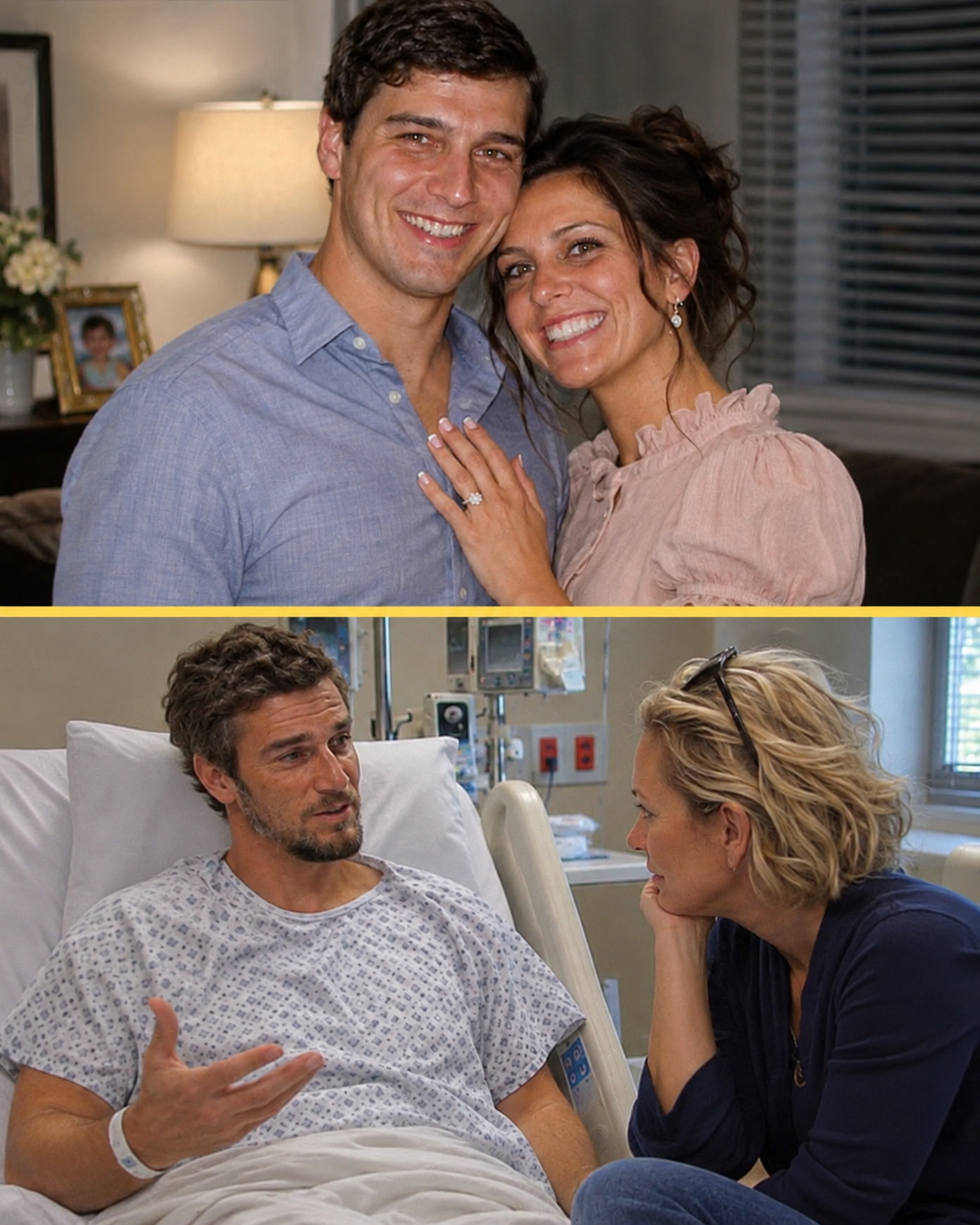
PART 1

My husband admitted he had been seeing another woman, so I ended our marriage right away. He gave up our family home, handed over most of our savings, and moved into a tiny apartment across town. Five years later, I found him lying pale and frail inside a sterile hospital room in Minneapolis. The very first words he spoke to me made me question everything I had believed about our painful divorce.
“I have been seeing someone else for quite a while now,” he confessed quietly across our kitchen table.
I remember staring at him in total shock, hoping this was some kind of cruel joke. “Who is she, and where did you even meet her?” I demanded, gripping the edge of my chair.
He looked down at his hands and refused to meet my eyes. “Who she is really does not matter at all anymore,” he murmured softly.
“For how long has this been going on behind my back?” I asked, my voice trembling with anger.
“It has been going on for long enough,” he replied flatly.
Those few cold words ended fourteen years of a marriage I thought was built on solid rock. The divorce happened quickly because neither of us wanted to drag the legal battle out in front of our kids. Graham did not fight for our house in St. Paul, nor did he try to keep most of our joint savings. He accepted a very limited parenting schedule without putting up much of an argument at all.
I truly believed he was eager to wipe the slate clean and start over with this mysterious other woman. However, as months turned into years, no new woman ever appeared in his life. Our children, Hannah and Noah, never met a girlfriend or heard him mention a partner. Mutual friends occasionally saw him shopping alone at the grocery store or eating dinner by himself at quiet diners.
He settled into a cramped, dim apartment and grew so quiet that even the kids stopped asking him personal questions. He faithfully attended every single birthday party and school event, yet he always left right before dessert was served. Deep down, I told myself I was glad to see him still looking so miserable and alone. Five years later, my phone rang late one evening, and Graham was calling me from Hennepin General Hospital.
“Can you please come down here tonight?” he asked, his voice sounding unusually weak and strained.
“What happened to you, and why are you calling me?” I asked, immediately feeling a spike of anxiety.
“Please just come, because I desperately need to tell you something important,” he pleaded softly.
He specifically asked me not to call the kids or bring them along just yet. When I finally reached his room on the fourth floor, I barely recognized the man lying under the thin sheets. His cheeks had sunk inward, and he struggled visibly just to adjust the blanket over his chest. Dark purple bruises covered the length of one forearm where needles had clearly been placed.
“Thank you so much for coming out here tonight,” he whispered as I stepped closer to the bed.
“What is this really about, Graham?” I asked, crossing my arms tightly over my chest.
“It is about something I should have told you five long years ago,” he said, looking up at me with glassy eyes.
I let out a heavy sigh and shook my head in frustration. “Graham, if this is some kind of apology about the divorce, I do not want to hear it,” I said firmly.
“I never cheated on you, Brooke,” he said clearly, holding my gaze without blinking.
I let out a bitter laugh, even though nothing about this situation was remotely funny to me. “You sat at our kitchen table and told me you were sleeping with someone else,” I reminded him sharply.
“I know exactly what I said to you that night,” he admitted quietly.
“You stood there and watched me pack your clothes into boxes, and you let our children think you ruined our family,” I said, feeling old anger bubble up again.
Tears began to slip silently down his gaunt cheeks as he nodded slowly. “I know I did, and I have regretted the lie every single day since,” he whispered.
PART 2
I stood up from the plastic chair, unable to sit still while my mind raced. “Then why on earth would you lie about something so destructive?” I demanded.
Graham tried to sit up straighter against his pillows to face me properly. His left hand slipped clumsily off the blanket, and he had to use his right hand to lift it back into place.
“I lied to you because I was sick,” he said, his voice barely louder than a whisper.
“What are you talking about, sick with what?” I asked, frowning in confusion.
“Five years ago, a neurologist diagnosed me with a progressive neurological disease called multiple system atrophy,” he explained slowly.
I stared at him blankly because I had never even heard of that condition before. “What does that even mean for you?” I asked, suddenly feeling a cold chill run down my spine.
“It steadily destroys your movement, your balance, and all the automatic things your body does without you thinking,” he explained patiently. “It ruins your blood pressure regulation and bladder control, and eventually, swallowing and breathing become nearly impossible.”
I looked over at the humming medical equipment and monitors stacked beside his bed. “Is this disease the reason why you are lying in this hospital right now?” I asked quietly.
“I fainted on my kitchen floor at home, and I fell so hard that I could not get back up,” he said. “Luckily, a neighbor in the hallway heard me calling out for help.”
I sat back down heavily because my legs suddenly felt completely unreliable beneath me. “Five years, Graham, you have known about this terminal illness for five whole years?” I asked in disbelief.
He nodded slowly against the pillow, looking utterly exhausted. “Yes, I got the final confirmation just a few weeks before we sat at the kitchen table,” he admitted.
“And instead of telling your own wife the truth, you looked me in the eye and told me you loved somebody else?” I asked, struggling to comprehend his logic.
“Your mother had just passed away after a brutal, exhausting decline,” he reminded me gently.
My mom had lived with us in St. Paul for three full years while her health slowly failed. During that time, I organized all her daily medications, helped her bathe, and slept on the living room couch whenever she could not be left alone. Graham always helped out whenever he got home from work, yet I was the primary person she called at all hours of the night.
Right after her funeral, I had confessed to him how guilty I felt for being relieved that I could finally sleep through the night. “I clearly remember you saying that you just wanted your life back,” he said softly.
“I meant that I wanted to go to the movies with you on a Friday night, and I wanted weekends where we did not have to worry about Mom,” I argued back.
“I truly thought you were finally free from being a full-time caretaker,” he murmured, looking down at his bruised arm.
“Free to do what, Graham, lose my husband to a terrible disease all by myself?” I cried out, wiping a tear from my cheek.
He looked away toward the dark hospital window, unable to face my anger. “The specialist could not tell me how fast the disease would progress, and I remembered everything you went through with your mom,” he said. “I simply could not ask you to go through that nightmare all over again for me.”
“You did not ask me anything at all, because you took the choice completely away from me,” I said sharply.
“I knew you would stay by my side just because you felt obligated to be a good wife,” he insisted weakly.
“So instead of letting me love you, you decided to make me hate you,” I replied, my voice breaking.
“I figured you would grieve the marriage, move on, and eventually meet a wonderful new man,” he explained. “The kids would grow up safely in our house, and you would have a real chance at a happy life.”
“You arrogantly decided what kind of life I deserved without even giving me a single vote in the matter,” I told him angrily.
“I know now that what I did was completely wrong,” he admitted, his voice trembling.
“No, you just know that your little plan failed miserably, and that is very different,” I countered.
For five long years, I had tortured myself imagining confronting the fictional woman who stole my husband away. I had quietly blamed myself for being too exhausted during my mother’s illness and for failing to notice his growing distance. Now he was lying in front of me, claiming he had watched me suffer for years and called it an act of kindness.
“Did you ever actually plan to tell me the truth?” I asked, needing to know how far the deception went.
“At the very beginning, no, I planned to take the secret to my grave,” he confessed. “Later on, I felt so deeply ashamed that every passing year made me feel like I had waited far too long.”
I wiped my face angrily with the back of my sleeve, feeling overwhelmed by grief and fury. “Hannah would not even let anyone mention your name at her high school graduation dinner,” I told him. “Noah spent years flatly refusing to spend the night at your apartment, so did you ever think about what you were doing to them?”
“I thought about what I was doing to them every single day,” he said, his voice cracking with pain.
“Then you should have swallowed your pride and told them the truth,” I snapped back.
He covered his eyes with his trembling good hand. “I did not want my children watching their father slowly become completely helpless,” he sobbed quietly.
“They were already watching you disappear right in front of their eyes, Graham,” I said softly.
He began crying much harder, his shoulders shaking beneath the blanket, yet I could not bring myself to comfort him just yet. A nurse walked quietly into the room to check his blood pressure and adjust his IV drip. I stepped out into the brightly lit corridor and immediately called Tessa, my closest friend in the world.
“I need you to tell me that I am not losing my mind right now,” I whispered into the phone.
Tessa listened patiently without interrupting while I explained every shocking word Graham had just told me. When I finished, she let out a long breath on the other end of the line. “You are completely allowed to be furious with him, Brooke, even if he is dying,” she said firmly.
I froze in the hallway because I had not actually used the word dying when I explained his condition. I looked back through the doorway at Graham, who was struggling pathetically just to lift a plastic cup of water to his lips.
“Is he really dying, Tessa?” I asked, my voice dropping to a terrified whisper.
“I honestly do not know, honey, so you need to talk to his doctors,” she replied gently.
When I walked back into the room, Graham had a thick manila folder waiting on top of his blanket. Inside were dozens of clinic appointment summaries, prescription lists, and a formal diagnostic letter from his neurologist. The letter proved beyond a shadow of a doubt that his diagnosis had been confirmed five years earlier.
As I read through the notes, I saw how his walking and balance had steadily deteriorated over the years. Lately, his blood pressure had been dropping dangerously low whenever he stood up, making him prone to sudden fainting spells. His doctor had even advised him months ago to stop driving completely for his own safety.
The clinic notes also showed he had missed several critical medical appointments simply because he could not arrange transportation. “Why on earth did you not tell Hannah or Noah when things got this bad?” I asked, setting the folder down.
“I was terrified they would feel obligated to drop everything and look after me,” he said weakly. “They had already lost the intact family they grew up with, and I did not want them spending their twenties worrying about a sick father.”
“So you let them walk around believing you were a selfish, cheating husband instead?” I asked again, shaking my head.
He looked down at his lap, unable to defend himself. “I genuinely thought they would get angry, heal, and eventually move on with their lives,” he whispered. “By the time I realized how deeply I had wounded them, I had no idea how to take the lie back.”
“Do you even hear how crazy that sounds right now?” I asked quietly.
“I have spent the last five years trying to spare everyone I love from trouble,” he said sadly. “Instead, I have caused more pain and trouble than I ever could have imagined.”
PART 3
I left the hospital before dinner was served because I needed fresh air to clear my spinning head. I did not make any promises to him about coming back, nor did I say goodbye properly. Once I got back to my quiet house in St. Paul, I walked into the living room and opened a drawer full of old family photographs.
I pulled out stacks of pictures showing Graham teaching Hannah to ride her first bicycle in the park. There were photos of Noah fast asleep on Graham’s chest, and snapshots of the four of us laughing together at Lake Superior. At the very bottom of the stack, I found a picture taken the year before our divorce.
In the photo, Graham was holding up a glowing birthday cake while I laughed brightly at something outside the frame. Looking at that image, I suddenly remembered every detail of that specific evening. He had needed to sit down heavily on a kitchen stool halfway through washing the dinner dishes.
I remembered teasing him playfully about getting old and losing his stamina. He had smiled back at me warmly, yet he did not get up from that stool for several long minutes. Looking at his tired eyes in that photograph, I wondered if he was already terrified of telling me what was happening to his body.
Early the next morning, I called Hennepin General Hospital and asked to speak directly with his attending physician. The doctor explained that she needed Graham’s explicit permission before sharing any confidential medical details with me. She put me on hold for a brief moment, and when she returned, she confirmed that Graham had happily granted full permission.
His doctor gently explained that his neurological condition had progressed to a very critical stage. He had recently developed severe swallowing difficulties and suffered a dangerous bout of aspiration pneumonia after liquid entered his lungs. “We have unfortunately reached a point where further medical treatment is unlikely to reverse what is happening,” she told me softly. “Our primary focus right now is simply keeping Graham comfortable and free of pain.”
My heart sank into my stomach as I gripped the kitchen counter to steady myself. “How much time does he actually have left?” I managed to ask through a tight throat.
“It is always difficult to predict these things with absolute certainty, but we are concerned he may only have a matter of days,” she replied quietly.
It was completely heartbreaking to hear those words spoken aloud over the phone. I had only just learned the devastating truth about his illness, and now I was being told he had only days left to live. That afternoon, I finally understood just how bad things had truly been for him behind closed doors.
With Graham’s permission, I drove over to his small apartment across town to collect some comfortable clothes for him. When I unlocked the front door and stepped inside, I was completely unprepared for the sad state of his home. Unwashed dishes sat stacked in the kitchen sink, and months of unopened mail covered the tiny dining table.
When I opened the refrigerator, there were almost no real groceries inside beyond a tub of yogurt and half a loaf of bread. A metal walker stood propped beside his unmade bed, its rubber handle wrapped tightly in gray duct tape to keep it from slipping. The small bathroom smelled faintly of damp towels that had clearly been hanging there for far too long.
Draped over a wooden chair lay the familiar blue button-down shirt he had worn to Noah’s birthday dinner a few months back. Seeing that shirt triggered a vivid memory of him gripping the porch railings tightly that day and claiming he had twisted his ankle. On the front of his refrigerator hung a single faded magnet holding a photograph of all four of us smiling together.
I sat down on the edge of his sagging mattress and finally broke down crying. He had spent five lonely years struggling to survive just a few miles away from me. All that time, I had bitterly believed he was out living the exciting, happy new life he had selfishly chosen over us.
When I returned to the hospital later that afternoon, I gently told him about everything I had seen inside his apartment. “You really should have swallowed your pride and asked someone for help, Graham,” I said softly.
“I know I should have,” he whispered, looking away in shame.
“Why on earth did you refuse to reach out to anyone at all?” I asked, sitting beside his bed.
“Because I was deeply embarrassed about what I had become,” he admitted quietly.
I looked closely at the frail man I had once promised to spend the rest of my life with. “You never had to go through all of this alone, Graham,” I told him gently.
His eyes filled with fresh tears as he looked back at me. “I know that now, Brooke, even if it is too late,” he murmured.
Later that evening, a compassionate member of the hospital’s palliative care team met with us to discuss Graham’s final wishes. He explained that he wanted purely comfort-focused treatment and hoped to spend his remaining days somewhere much quieter than a busy hospital ward. The specialist explained that a local hospice facility would be ideal if a private bed became available soon.
Graham turned his head slowly on the pillow and looked toward me with hopeful, uncertain eyes. “If they move me over there, would you still come and see me?” he asked softly.
I took a long, deep breath and held his gaze for a moment before answering. “Yes, Graham, I promise I will come see you,” I replied steadily.
Then came the impossibly difficult conversation with our children that I had been dreading all day. Hannah was eighteen years old and just starting college, while Noah was twenty and working his first full-time job. Our sudden divorce five years ago had left both of them with deep emotional wounds that neither of them ever liked discussing.
I called Hannah and Noah that evening and asked them both to come over to my house as soon as they could. I knew I could not wait another single day to tell them everything. Their father was actively dying, and they deserved the chance to know the truth and see him before it was too late.
“Is Dad in some kind of trouble again?” Noah asked cautiously as soon as he walked through my front door.
“He is currently admitted at Hennepin General Hospital,” I answered calmly, motioning for them to sit on the couch.
Hannah set her backpack down on the floor and rolled her eyes in annoyance. “Is this just another dramatic excuse for us to feel sorry for him?” she asked coldly.
I sat down across from them and told them the entire truth as gently and carefully as I possibly could. Neither of them interrupted me once while I explained his diagnosis, his declining health, and why he had lied about the affair. When I finally finished speaking, Noah stared silently at the living room floor while Hannah crossed her arms tightly over her chest.
“So you are telling us he was never actually having an affair?” Hannah asked, her voice trembling slightly.
“No, sweetheart, there was never another woman,” I confirmed softly.
“And he just stood back and let us believe he betrayed you for five whole years?” she demanded, disbelief written all over her face.
“Yes, he thought that was the best way to protect all of us,” I explained quietly.
Noah finally lifted his head and stared directly at me with wide, panicked eyes. “How long does he actually have left, Mom?” he asked, his voice cracking.
“The doctors told me this morning that it may only be a matter of days,” I answered honestly.
Hannah suddenly burst into tears, covering her face with both hands. “I hated him so much, Mom, because I hated him for what I thought he did to you,” she sobbed loudly.
“I know you did, sweetheart, and I am so sorry,” I said, wrapping an arm around her shaking shoulders.
“He literally let me hate him all these years while he was slowly dying alone?” she cried out in anguish.
“In his own misguided way, he truly believed he was protecting you and your brother,” I told her gently.
“Lying to your own kids and abandoning them is not protecting anyone!” she shouted through her tears.
Noah wiped his wet eyes roughly with the back of his hand and stood up. “Can we go to the hospital and see him right now?” he asked urgently.
“Visiting hours are over for tonight, so I will drive both of you there first thing tomorrow morning,” I promised them.
PART 4
The next morning, the three of us walked into the hospital together in heavy, nervous silence. Graham was propped up slightly in his bed when we entered the room, yet his entire face changed the second he saw our children. “Hannah, Noah, you came,” he breathed out, looking completely overwhelmed.
Hannah walked slowly into the room and stopped right at the foot of his hospital bed. “Why did you not just tell us the truth five years ago, Dad?” she asked directly.
Graham looked down at his hands, clearly struggling to find the right words to say to his daughter. “I knew that if I told you kids, you would immediately want to step in and help me,” he said softly. “I imagined you missing your college classes, turning down great job opportunities, and spending all your free time taking care of me, so I thought staying away would protect you from that burden.”
“So you made us think you were a terrible, cheating husband instead?” Hannah asked, tears spilling down her cheeks.
His eyes filled with deep sorrow as he looked up at her. “I genuinely thought you would be mad for a while and eventually move on with your lives,” he explained weakly. “By the time I realized how badly I had hurt you, I was too ashamed and did not know how to tell you the truth.”
Noah shook his head slowly from side to side, looking heartbroken. “We would have gladly helped you through anything, Dad,” he said firmly.
“I know you would have, son, and that is exactly why I kept my mouth shut,” Graham replied quietly.
“You did not even give us the chance to be there for you,” Noah said, his voice thick with emotion.
Graham began crying quietly, wiping his wet face with the edge of the sheet. “I was terrified of becoming a heavy burden on the people I love most, so I convinced myself that staying away was the kindest thing I could do,” he confessed.
Hannah wiped her wet cheeks and let out a shaky sigh. “Well, Dad, it really was not kind at all,” she said honestly.
“I know that now, and I am so deeply sorry for everything,” he whispered.
For a long, heavy moment, nobody in the quiet room spoke a single word. Then Hannah slowly pulled a plastic chair right up beside his bed and sat down. “I honestly do not know if I can fully forgive you yet,” she told him softly.
“You do not have to forgive me at all, sweetheart,” he assured her gently.
She reached out hesitantly and placed her warm hand over his bruised fingers. “I am still angry, Dad, but I am right here with you now,” she whispered.
Noah moved quietly over to the other side of the bed and placed a steady hand on Graham’s thin shoulder. For the first time in five long years, the four of us were finally together in the exact same room again. Two days later, Graham was safely transferred to a peaceful, quiet hospice house overlooking a small wooded park.
By the time he arrived at the hospice, he had grown noticeably much weaker than before. He could barely sit up without full assistance from the nurses, and even speaking a few sentences exhausted him completely. The hospice nurses gently explained to us that his neurological condition was deteriorating very rapidly now.
They focused entirely on keeping him comfortable, managing his pain, and helping him breathe easily. Hannah and Noah came to the hospice center every single day after their classes and work shifts ended. Sometimes we simply sat quietly beside his bed, listening to the soft rustle of the trees outside his window.
Other times, we flipped through old photo albums together and talked about all the milestones and funny memories he had missed. On Thursday afternoon, Hannah brought along the framed photograph of Graham teaching her to ride her bicycle. “Do you remember taking this picture, Dad?” she asked, holding it up where he could see it clearly.
A faint, genuine smile crossed Graham’s pale face as he looked at the photo. “I remember you crashing straight into your mother’s rose bushes,” he whispered weakly.
Hannah laughed softly right through her tears. “That only happened because you let go of the seat!” she teased him gently.
“You were the one who yelled at me to let go,” he reminded her with a tiny chuckle.
“I was only seven years old, Dad, so you were not supposed to listen to me!” she replied.
For a brief, wonderful moment, Graham actually laughed out loud with us. Later that evening, when the kids went downstairs to the lobby to grab cups of coffee, Graham asked me to stay behind for a minute. “Do you still hate me for what I did, Brooke?” he whispered, looking up at me anxiously.
I looked down at him, feeling a complex mix of deep sorrow and lingering ache in my chest. “I hated you for a very long time, Graham,” I admitted truthfully.
He closed his eyes slowly and let out a soft sigh. “I do not blame you one bit for feeling that way,” he murmured.
“I do not hate you anymore, Graham, yet I am still deeply hurt by the choices you made,” I told him gently.
“I know you are, and I wish I could take the pain away,” he whispered.
“If you had just trusted me and told me five years ago, maybe we would still be married today,” I said softly. “Maybe life would have been incredibly difficult, yet at least we would have made all those hard decisions together as partners.”
A single tear slipped silently down his pale cheek onto the pillow. “I should have trusted you with the truth from the very beginning,” he admitted quietly.
“Yes, Graham, you really should have,” I agreed softly.
He reached his trembling hand weakly across the blanket toward mine. “I know I can never give you all those lost years back,” he whispered.
“No, you cannot,” I whispered back, closing my fingers gently around his cold hand.
I sat quietly beside his bed and held his hand until he finally drifted off into a deep sleep. Late that evening, the hospice nurse pulled me aside in the hallway and told me Graham’s condition was worsening quickly. She strongly encouraged me to bring the kids back early in the morning to spend whatever precious time remained with him.
I immediately called Hannah and Noah and told them to meet me at the hospice first thing tomorrow. On Friday morning, exactly one week after Graham first called me from the hospital, I arrived at the hospice before breakfast. Hannah and Noah were already waiting quietly in his room when I walked through the door.
Graham was sleeping deeply, and his breathing sounded noticeably slow and uneven. The gentle nurse explained to us that his body was shutting down and he was nearing the very end of his life. We pulled our chairs close together around his bed so he would feel completely surrounded by love.
Hannah held tightly onto his left hand while Noah sat right beside her with his arm around her back. I sat quietly on Graham’s right side, resting my hand gently over his forearm. For a long while, nobody in the peaceful room spoke a word, letting the quiet comfort fill the space.
Then Noah pulled out his phone and softly played one of the classic jazz songs Graham used to listen to every Sunday morning. Hearing the familiar saxophone melody, Graham slowly opened his eyes for a brief moment. “Do you remember making pancakes for us every Sunday morning, Dad?” Hannah whispered softly.
A faint, peaceful smile touched the corners of his dry lips. “You always insisted on extra chocolate chips,” he murmured barely above a whisper.
Hannah laughed softly through her streaming tears. “Every single Sunday without fail,” she agreed.
Graham slowly turned his eyes toward me, searching my face one last time. “Brooke?” he breathed out softly.
“I am right here beside you,” I answered immediately, leaning closer to his pillow.
His voice was barely audible over the soft jazz music playing in the background. “Will you stay with me until the end?” he asked weakly.
I leaned down closer and took his frail hand firmly into both of mine. “Yes, Graham, I am not going anywhere,” I promised him.
“Even after everything I put you through?” he whispered, looking into my eyes.
“Yes, even after everything,” I assured him softly.
He squeezed my fingers weakly with whatever tiny bit of strength he had left. “Thank you so much,” he breathed out.
I gently brushed a stray lock of hair away from his pale forehead. “You can finally rest now, Graham, because we are all right here with you,” I whispered.
His heavy eyes slowly fluttered closed as a look of deep peace settled over his face. We sat quietly beside his bed while the soft jazz music played gently in the background. After a little while, his breathing grew much slower, with longer and longer pauses between each breath.
Then, very quietly and peacefully, he took one final breath and let it go. I waited silently for a long moment, still holding his warm hand in mine. The hospice nurse stepped quietly forward, checked his pulse with her stethoscope, and gently confirmed that he had passed away.
Hannah immediately began sobbing quietly against Noah’s shoulder as he held her tight. I leaned slowly over Graham and pressed a tender kiss against his cool forehead. “Goodbye, Graham,” I whispered softly into the quiet room.
Then I pulled the soft blanket gently up over his hand and stayed right beside him while our children cried. We buried Graham four days later at a quiet cemetery overlooking the river in St. Paul. Hannah and Noah stood closely beside me as his casket was slowly lowered into the ground.
I honestly had not expected to cry quite as much as I did during the service. Yet when Noah stepped forward and placed that faded photograph of the four of us beside the white flowers, I could not hold back my tears any longer. After the funeral ended, the three of us returned to my house for a quiet family dinner.
For the very first time in five long years, we sat around the table talking about Graham without a trace of anger. We laughed softly as we remembered his terrible dad jokes, his famous Sunday chocolate chip pancakes, and how loudly he always sang off-key in the car. That evening, after Hannah and Noah finally hugged me goodbye and headed home, I walked into the living room.
I picked up our old family photograph and placed it carefully right in the center of the fireplace mantel. I stood there in the quiet room looking at our smiling faces for a very long time. Finally, I let out a soft sigh and whispered to the empty room, “I really wish you had just told me the truth, Graham.”
THE END.