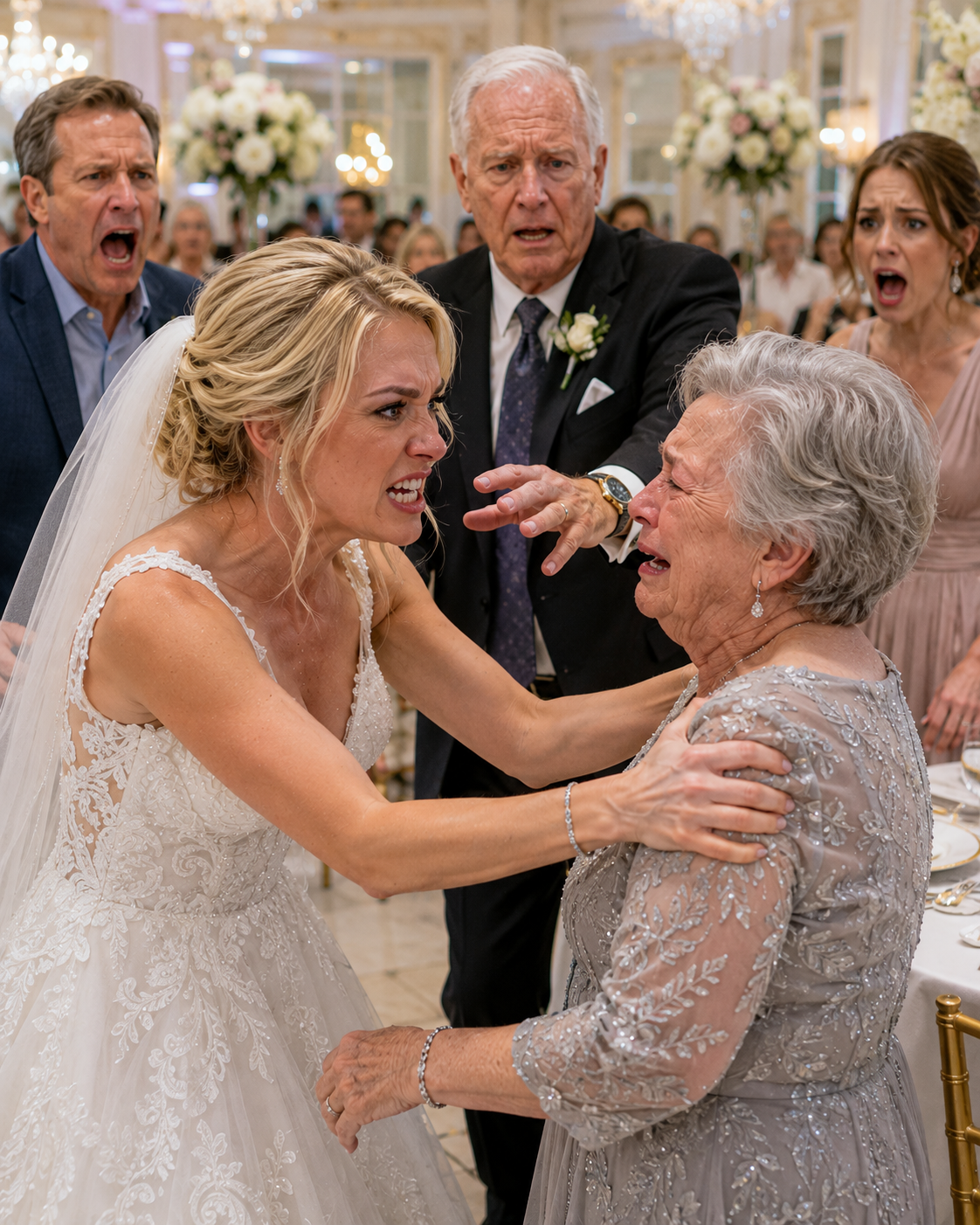

My entire family crossed half the country, changed time zones, spent thousands of dollars, and rearranged their lives to celebrate my brother’s unborn children.
But somehow, they couldn’t drive two hours to attend my wedding.
That was the one thought pressing against my chest as I stood at the back of Gracewood Chapel outside Richmond, Virginia, staring at the polished wooden pews I had reserved for the people who raised me.
The chapel smelled of old timber, candle wax, and the inexpensive white lilies I had bought from a wholesale flower market that morning.
My mother’s seat was empty.
So was my father’s.
My older brother, Jason, and his pregnant wife, Brooke, were nowhere to be seen.
Even the antique lace handkerchief my mother had promised to bring as my “something old” never arrived.
At the altar, my fiancé, Matthew, turned toward me.
Morning sunlight touched the side of his face. He saw the hurt in my eyes before I could hide it.
His shoulders tightened.
But he didn’t look at the empty pews.
He looked only at me.
As if I were enough to fill the entire chapel.
Three months earlier, my family had flown from our small Virginia hometown all the way to a luxury resort in California for Jason and Brooke’s gender reveal.
They weren’t expecting one baby.
They were expecting triplets.
The celebration looked like something created for social media.
Mom ordered matching embroidered shirts.
Dad, who had spent my entire childhood complaining about gas prices, upgraded everyone’s flights because, in his words:
“This is family history, Hannah. You can’t put a price on something like this.”
My aunt hired a drone operator and a professional photographer.
At sunset, everyone gathered on a private beach while three enormous clouds of blue smoke exploded into the sky.
They cried.
They hugged.
They posted videos everywhere.
And I had been happy for them.
Truly.
When Dad called and quietly admitted he was short on the deposit for their oceanfront suite, I transferred him the money without hesitation.
I even delayed my own car payment to do it.
Then my wedding came.
Two hours from my parents’ house.
Same state.
Same highway.
Suddenly, traveling became impossible.
Mom said the California trip had worsened her chronic fatigue.
Dad claimed morning driving aggravated an old back injury from his years working construction.
Meanwhile, I had rented a simple wedding gown instead of buying one because I was still helping cover their mortgage.
I made most of the decorations myself.
I chose a small chapel and a modest reception.
I had spent years cutting pieces out of my own life to keep theirs intact.
And they couldn’t even show up.
At nine that morning, one hour before the ceremony, I sent one final message to the family group chat.
I hope someone is already on the road. I saved the front row for you.
Forty-five minutes passed.
Nothing.
Then Jason replied.
Brooke is having strong false contractions. We’re going to the ER. Mom and Dad are coming with us. Sorry, sis. Priorities. Hope you have a good day.
I stood in the vestibule staring at the screen.
My bouquet trembled so badly that yellow pollen fell onto the front of my rented dress.
Then someone stepped behind me.
“Here.”
It was Matthew’s mother, Patricia.
She didn’t tell me not to cry.
She didn’t say everything happened for a reason.
Instead, she reached behind her neck and unclasped a strand of heirloom pearls.
She placed them around my neck.
The cool weight settled against my skin.
“My grandmother wore these,” she said quietly. “And now you will.”
Her eyes hardened with protective determination.
“From today forward, you’re my daughter too. And my daughter is not walking down that aisle looking like she is missing anything.”
She signaled the coordinator.
Within minutes, Patricia and Matthew’s sister moved two large floral arrangements from the altar and placed them across the empty pews on my side.
Hydrangeas covered the absence.
Matthew’s father offered me his arm.
He walked me halfway down the aisle.
Then he kissed my cheek and stepped aside.
I walked the final distance alone.
Head high.
When the minister asked, “Who gives this woman to be married to this man?”
I looked briefly at the flowers covering the empty seats.
Then at Matthew.
“I came here by my own choice.”
My voice didn’t break.
At the reception, surrounded by Matthew’s loud, affectionate family, my phone vibrated once.
I went into the restroom and checked it.
Mom.
Hope it was beautiful. Send pictures. Jason says Brooke is resting.
I stared at the message.
Then I turned off my phone.
I walked back into the reception and found my husband.
But while I danced with Matthew, something bothered me.
Jason’s message.
He was supposedly rushing his pregnant wife to the emergency room.
Yet the text had been perfectly written.
No frantic spelling mistakes.
No unfinished sentence.
Jason usually typed like his thumbs were fighting each other whenever he was stressed.
Something didn’t fit.
And once I came home from my honeymoon, I intended to find out why.
For twenty-four days, I didn’t call my family.
For twenty-four days, they didn’t seem to notice.
Matthew and I spent our short honeymoon in a modest cabin in the Blue Ridge Mountains.
We hiked.
We drank cheap wine beside a fireplace.
We slept late.
And Matthew never once forced me to talk about my family.
But beneath everything, my anger was changing.
It was becoming quieter.
More focused.
The morning after we returned, I sat at the kitchen island while Matthew unpacked.
For six years, I had been holding my family together financially.
After Dad injured his back and his income dropped, I began paying most of the mortgage.
When Mom’s work hours were cut, I covered her health insurance.
When Jason and Brooke moved into their expensive suburban rental, I paid the security deposit because they kept reminding everyone how costly triplets would be.
My family called it helping.
I called it survival.
Years earlier, I had opened a joint emergency savings account and credit line with my parents.
The agreement was simple.
Medical emergencies.
Serious repairs.
Real disasters.
Nothing else.
I made coffee and logged into the account.
I hadn’t checked it in four months.
I trusted them.
The screen loaded.
The cup slipped from my hand and shattered on the floor.
Matthew ran into the kitchen.
“Hannah?”
I couldn’t speak.
I pointed.
The emergency savings account had once contained $25,000.
Money I had personally saved.
Money Matthew and I intended to use toward our first house.
The balance was zero.
The connected high-limit credit card was worse.
Thirty-five thousand dollars.
Maxed out.
Matthew moved behind me.
“What happened?”
I opened the transaction history.
The charges were dated three months earlier.
The week of Jason and Brooke’s California gender reveal.
Luxury beach cabana: $2,600.
Private yacht charter: $4,300.
Helicopter smoke display: $5,200.
Catering package: $3,400.
Designer maternity clothing: $1,900.
Spa treatments.
Expensive dinners.
A luxury watch purchased in Los Angeles.
My chest tightened.
“They told me Jason got a huge work bonus.”
Matthew leaned closer.
“Hannah. Look at the authorized users.”
I clicked.
My parents were there.
And so was Jason.
Added three days before the trip.
My hands went cold.
Adding an authorized user at that account level required my signature.
“I never signed this.”
Matthew said nothing.
“He forged my name.”
The truth hit me all at once.
They hadn’t simply skipped my wedding for a better celebration.
They had funded that celebration with my money.
My house savings.
My credit.
My future.
They knew I rarely checked that emergency account because I trusted them.
And they exploited that trust completely.
Something inside me changed.
The woman who had stood crying in the chapel vestibule was gone.
I picked up my phone.
“What are you doing?” Matthew asked.
“Calling a lawyer.”
Within days, I was sitting across from a forensic financial attorney named Jonathan Price.
I placed six years of statements on his desk.
“Mortgage payments. Utilities. Insurance. Family loans. Everything.”
He looked through the binder.
“What do you want?”
“My name removed from all of it.”
He studied me.
“If you stop guaranteeing your parents’ mortgage, given their income and credit, they will probably default.”
“I understand.”
“They could face foreclosure.”
“I understand.”
Then he reached the credit-card section.
“This is more serious. If your brother forged your digital authorization to gain access to this credit line, that may constitute identity theft and fraud.”
“What are my options?”
“You can absorb the debt.”
“No.”
“Or dispute it formally and report the forged authorization.”
“What happens then?”
“The bank will likely freeze the account and investigate the authorized users. Your brother could face criminal exposure.”
I looked out the window.
Jason’s triplets hadn’t been born yet.
Part of me still hesitated.
“Prepare the criminal complaint,” I said. “But don’t file it yet.”
Jonathan nodded.
“I want the fraudulent charges disputed. Freeze everything. Remove my liability based on the forged authorization. Let the bank pursue whoever actually spent the money.”
“And your parents’ mortgage?”
“Stop my guarantee.”
“Insurance?”
“Stop my payments.”
“Your brother’s lease?”
“I guaranteed the deposit.”
“You want that withdrawn too?”
“Yes.”
Jonathan leaned back.
“This will hit them all at once.”
“That’s the point.”
I left his office feeling lighter than I had in years.
That evening, I canceled every automatic payment connected to them.
Mortgage.
Utilities.
Mom’s insurance.
Jason’s rental backing.
One by one, the invisible ropes disappeared.
For ten days, warning notices arrived.
I knew because postal previews still showed scans of mail going to my parents’ house.
They probably ignored the envelopes.
They had spent years assuming I would handle everything.
Then came day twenty-five.
Tuesday morning.
My phone exploded.
Calls.
Texts.
Voicemails.
By nine o’clock, I had hundreds of notifications.
Matthew looked at the vibrating phone.
“Want me to answer?”
“No.”
I took a sip of tea.
“They need to hear silence first.”
At 9:15, I played the first voicemail.
Dad.
“Hannah, call me immediately! The bank says your guarantee was removed. The mortgage payment bounced. What did you do?”
Delete.
Next.
Mom.
“Hannah, my insurance isn’t working! My medication is expensive. Stop being childish and fix this!”
Delete.
Then the family chat.
Dad: The utilities say the autopay was canceled.
Mom: You’re doing this because of the wedding?
Jason: You are stressing Brooke and putting the triplets at risk. Our landlord called about the lease. How can you punish babies over a family argument?
I read every message.
No apology.
No acknowledgment.
Only panic because the money had stopped.
So I finally answered.
I am not punishing anyone. I am simply refusing to continue financing a lifestyle you stole from me.
Then I attached the credit-card statement.
Every Florida expense was highlighted.
For a moment, nobody replied.
Then Dad called.
I answered on speaker.
“Hannah…”
His voice sounded different.
Small.
“Why does this statement show Jason paying for the California trip using a card connected to you? He told us he got a promotion.”
In the background, Jason yelled:
“She’s lying! She’s jealous!”
“I’m not lying,” I said. “Jason forged my authorization, drained $25,000 from the emergency fund, and added another $35,000 in debt.”
Mom started crying.
“We didn’t know.”
“You didn’t want to know.”
Silence.
“You enjoyed the yacht. The hotel. The helicopter. The restaurants. Nobody asked how Jason suddenly became rich enough to pay for all of it.”
Dad breathed heavily.
“Hannah, the bank says we could lose the house.”
“You have thirty days to refinance.”
“We can’t.”
“I carried that house for six years.”
“Hannah, please.”
“The week you spent my house savings in California was also the week you decided driving two hours to my wedding was too difficult.”
Mom sobbed.
I continued.
“I’m done paying for people who treat my sacrifices like something they’re entitled to.”
Then I hung up.
I blocked their calls.
But the hospital story still bothered me.
So I searched.
Brooke loved social media.
She had posted nothing on my wedding day.
But other people had.
I searched location tags from restaurants around their neighborhood.
Twenty minutes later, I found it.
A stranger had uploaded a brunch photo from an expensive French café called Maison Bleu.
In the background sat Jason and Brooke.
Brooke was smiling.
Jason had a cocktail.
There was no hospital.
No emergency.
The timestamp was 11:15 a.m.
The exact time I was standing at the altar.
I downloaded the image.
Three days later, an invitation arrived.
Jason and Brooke’s baby shower.
At my parents’ house.
Saturday afternoon.
The invitation had clearly been mailed before their financial problems began.
They probably expected me to show up with another expensive gift.
“Are you going?” Matthew asked.
I zipped up a black tailored dress.
“Yes.”
“You look like you’re attending a funeral.”
“That feels appropriate.”
Jason had ignored every email from my lawyer asking him to formally accept responsibility for the fraudulent debt.
So Jonathan had prepared two documents.
One was a debt assumption agreement.
The other was a criminal complaint ready to be filed Monday morning.
Matthew drove.
When we reached my childhood home, giant pastel letters spelling BABY covered the lawn.
Caterers moved through the front door.
Cars filled the street.
They were holding an elaborate baby shower in a house weeks away from default.
I walked inside.
The living room was packed.
Jason stood by the fireplace holding a microphone.
Brooke sat in a velvet chair wearing a floral crown.
Mom saw me first.
Her champagne glass slipped from her fingers and shattered.
Silence spread through the room.
Dad looked terrified.
“Hannah. Why are you here?”
“I brought a gift.”
Jason walked toward me.
“Get out. After everything you did to us?”
I opened my portfolio.
“I didn’t abandon you, Jason.”
I placed the documents on the gift table.
“I stopped paying for you.”
Guests started whispering.
Brooke stood.
“Jason, make her leave.”
“I will leave.”
I looked directly at him.
“After you sign this.”
“What is it?”
“A formal assumption of the $35,000 debt you created using my forged authorization.”
His face changed.
“If you sign, you take responsibility for what you spent.”
“And if I don’t?”
“My lawyer files the fraud complaint Monday morning.”
The room went completely still.
Jason laughed nervously.
“She’s bluffing.”
“No.”
“You’d have your own brother arrested before his children are born?”
“You committed fraud before your children were born.”
Mom grabbed my wrist.
“Hannah, please. Not here.”
I removed her hand.
“There is no private version of this anymore.”
Dad stepped forward.
“We couldn’t attend the wedding because Brooke was in the hospital.”
I looked at him.
“The hospital.”
Then I removed the photograph.
I handed it to Dad.
He put on his glasses.
His hands began to shake.
“What is this?”
“Jason and Brooke having brunch at Maison Bleu.”
Mom leaned closer.
“The timestamp is 11:15 on my wedding day.”
Her face collapsed.
She turned toward Jason.
“You told us she couldn’t move.”
Jason backed away.
“You told us the doctor said Brooke could lose the babies,” Dad said.
Jason’s face reddened.
“I asked whether I could go to the ceremony and come back,” Dad continued. “You told me leaving would stress her enough to cause a miscarriage.”
“Dad—”
“You kept us away.”
Jason snapped.
“Because if you went to Hannah’s wedding, you would have talked to her!”
The entire room froze.
He realized too late what he had admitted.
“You would have asked her about California. She would have seen the charges. I needed you away from her.”
Guests started quietly leaving.
Mom sat down and covered her face.
Dad stared at Jason as if he no longer recognized him.
Brooke began crying.
I held out a pen.
“Sign.”
Jason stared at it.
“Sign the debt agreement and I leave.”
He looked toward Dad.
Dad turned away.
Finally, Jason took the pen.
His signature shook across the page.
I checked it.
Then placed the papers back in my portfolio.
“It’s done.”
Matthew opened the front door.
I was almost outside when Dad called my name.
“Hannah.”
I turned.
He looked ten years older.
“The house.”
I waited.
“We can’t refinance without you. My medical debt ruined my credit. Jason’s credit is destroyed.”
His voice broke.
“We’re going to lose it.”
I looked around.
The staircase where Jason and I used to race.
The kitchen Mom remodeled with money I sent.
The roof I helped replace.
“You lost the house when you began treating my sacrifices as something you deserved.”
Dad lowered his eyes.
“You built your security on my money. And then you treated me like I was disposable.”
I walked away.
Three months later, the house went into foreclosure.
My parents had no real savings.
Jason now legally carried the high-interest debt he created.
Without my backing, Jason and Brooke also lost their expensive rental.
They moved into a small two-bedroom apartment.
The triplets were born healthy.
That part genuinely made me happy.
But the reality of three babies, massive debt, and no financial safety net destroyed the glamorous image Brooke had spent years creating online.
Six months later, she and Jason separated.
My parents eventually moved into subsidized senior housing.
Dad took a part-time job at a hardware store despite his back problems.
Mom returned to retail work.
I knew because small towns talk.
I never called them.
But I also never blocked physical mail.
Maybe some tiny part of me still wanted my parents to become people I could recognize again.
Almost one year after my wedding, an envelope arrived.
Mom’s handwriting.
I opened it at the kitchen island in the house Matthew and I had recently purchased with money I had slowly rebuilt.
Inside was one sheet of lined paper.
Dear Hannah,
We lost the house. Jason lost his marriage. We are tired and broke. For months, I blamed you because it was easier than admitting what we did.
Jason stole your money. But he is not the only reason we lost you.
I chose not to ask questions when everything benefited us. I believed him when he said we couldn’t attend your wedding because I wanted to believe I was doing the right thing for the babies.
I should have driven those two hours.
I should have been sitting in that front row.
We are bankrupt now, Hannah. Financially, yes. But also in ways money cannot explain.
I am sorry.
Mom.
I read it twice.
I didn’t cry.
The pain was still there, but it had become scar tissue instead of an open wound.
I folded the letter and placed it in a drawer.
I kept it.
Not because it repaired anything.
But because it proved something.
Eventually, every family has to balance its own ledger.
That weekend, Matthew and I drove two hours down the highway.
We returned to Gracewood Chapel.
It was a quiet Tuesday afternoon.
The doors were unlocked.
We walked inside.
Sunlight poured through the stained-glass windows.
I stood at the back of the chapel exactly where I had stood one year earlier.
Then I looked at the front row.
Empty.
The same seats.
But this time, their emptiness didn’t hurt.
Nobody was expected.
Nobody was missing.
Matthew stood beside me holding my hand.
The man who had stayed when everything else collapsed.
I squeezed his fingers and smiled.
One year earlier, I had looked at those empty pews and thought they proved I had no family.
Now I understood something different.
Family was not measured by who shared my blood.
It was measured by who showed up.
And somehow, standing in that quiet chapel beside the person who had never once asked me to earn his loyalty, the room felt fuller than it ever had.